Dining Out: Legami Ties the Knot
02 Sep 2026
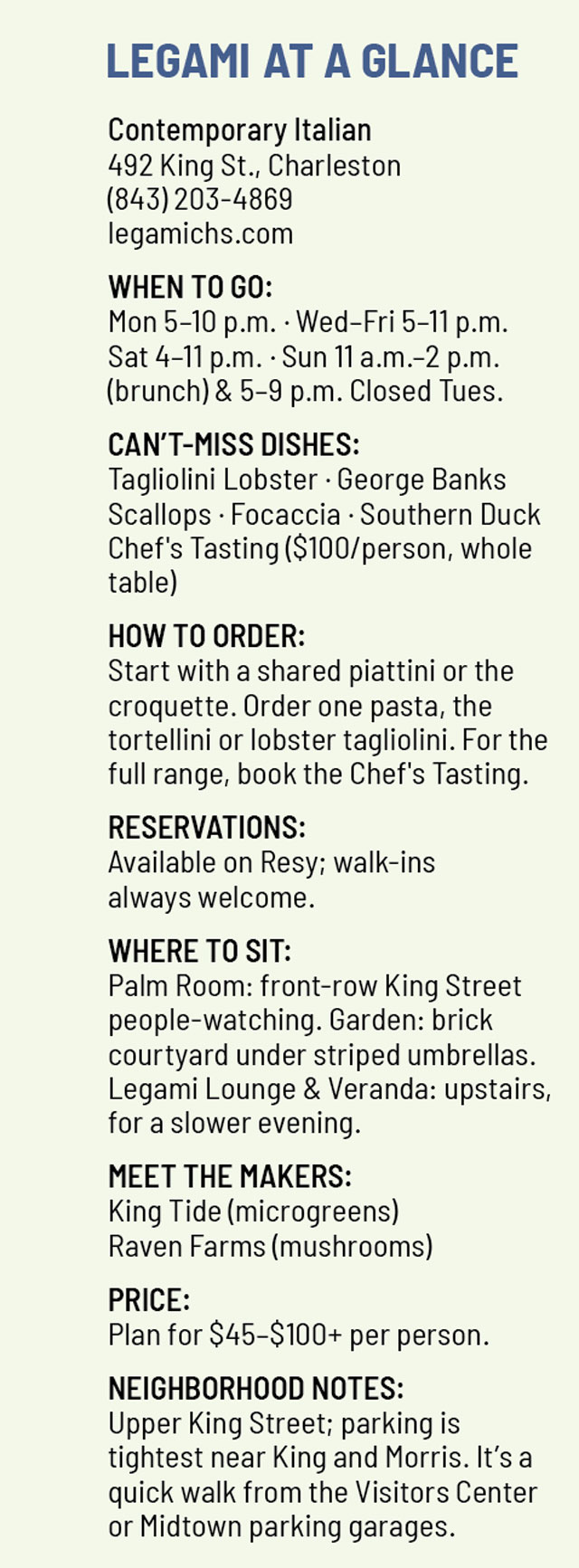
An Italian import finds its authentic Charleston accent
Sept-Oct 2026
Written By: Daria Smith | Images: Peter Frank Edwards
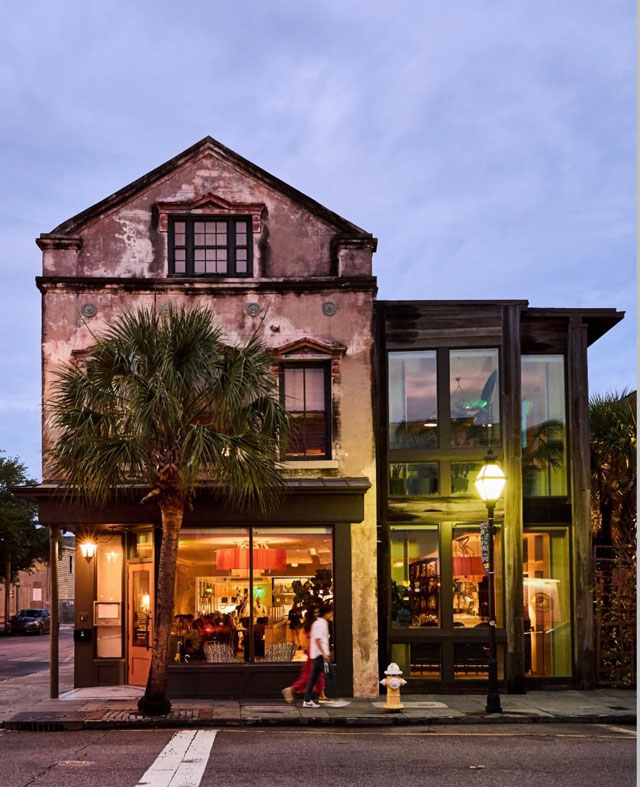
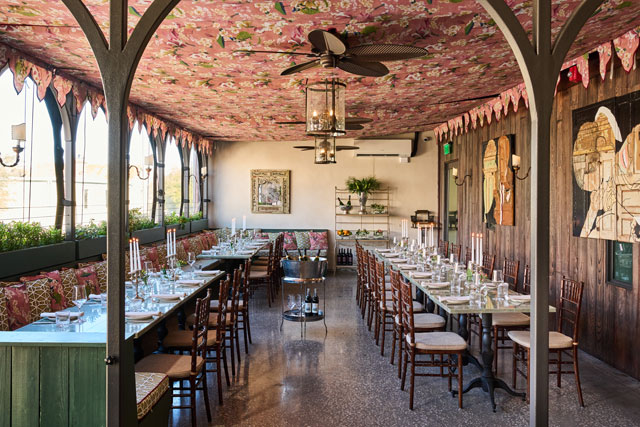
Step through the doors at 492 King St, and light pours through a wall of windows into the Palm Room. Hand-painted palm trees by New York-based Italian artisan Flavio Bragaloni flank Venetian-plastered walls, and dark green millwork trimmed in blush pink. Passersby on King Street are part of the evening’s entertainment.
It was peak-pandemic in Charleston. Gianni and Susie Ropolo, along with sons Eldredge and Tyler, the family behind Rhode Island’s Washington Street Hospitality and its two Pasta Beach outposts, were ambling down King Street when a dapper building stopped them cold. The bi-level, 6,000-square-foot space sat vacant since restaurant 492 shuttered its doors in 2018.
Tyler designed a 180-seat homage to his family’s hometown of Torino, Italy, and Charleston’s own historic charm. Raffia light fixtures imported from Torino keep the building’s 19th-century bones open and airy. Legami translates to ties, connections in Italian–a fitting name for a passion project shared by two families, the Ropolos of Turin, Piedmont in Italy, and their cousins the Migliori’s, whose roots trace to immigrants from Frosinone, Italy.
October marks two years since Legami opened its doors, with Executive Chef Andrea Congiusta at the helm. Congiusta, born and raised in Rome, began training young, enrolling in a high school for the culinary arts before working his way through more than a decade of Michelin-starred kitchens across Italy, among them Il Pagliaccio under chef Anthony Genovese in Rome, and Casadonna/Reale under acclaimed chef Niko Romito in Abuzzo. When Legami opened, Congiusta’s refined pedigree materialized as small, architectural bites built on Michelin-style mise en place.
“One of the most important goals was to fold Legami and Italian culture into the Charleston soil,” Congiusta says. “We never wanted to compromise what real Italian food is for us.” The menu restructured around fuller courses, its roots kept intact—contemporary, authentic Italian, with the occasional French accent as a nod to Torino’s location in Northern Italy. A menu tied together by the team’s collective upbringings in Turin and Rome.
An intuition for balance flows through the cuisine like a bassline. Congiusta, who plays guitar, compares his palate to an amplifier’s equalizer. “It’s the idea of the roller coaster, always having different flavor peaks that all work well together, and an ‘equalized’ taste,” says Congiusta. No single note overpowers the mix. It shows in the Tagliolini Lobster, medallions of poached tail fanned over pasta finished in a tomato water lobster bisque and lemon butter, topped with tarragon.
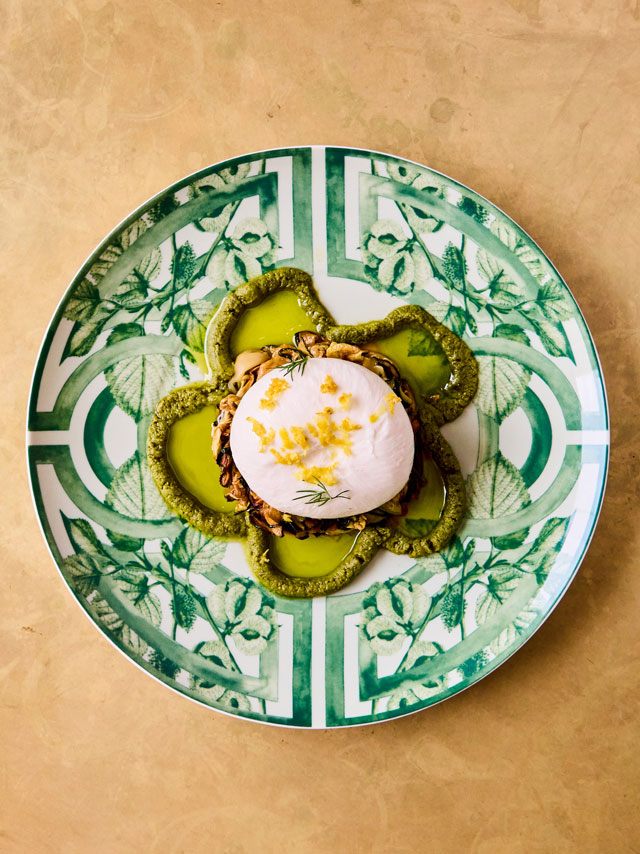
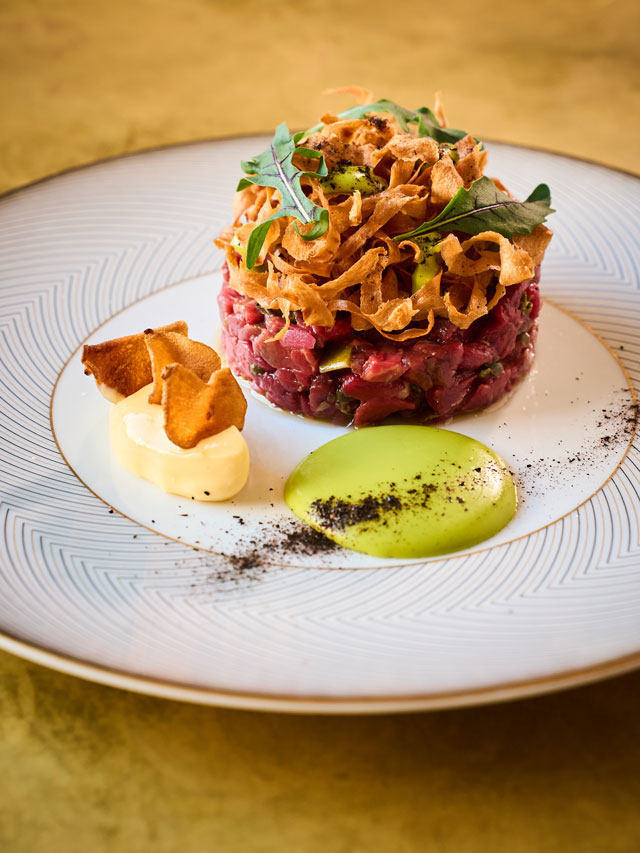
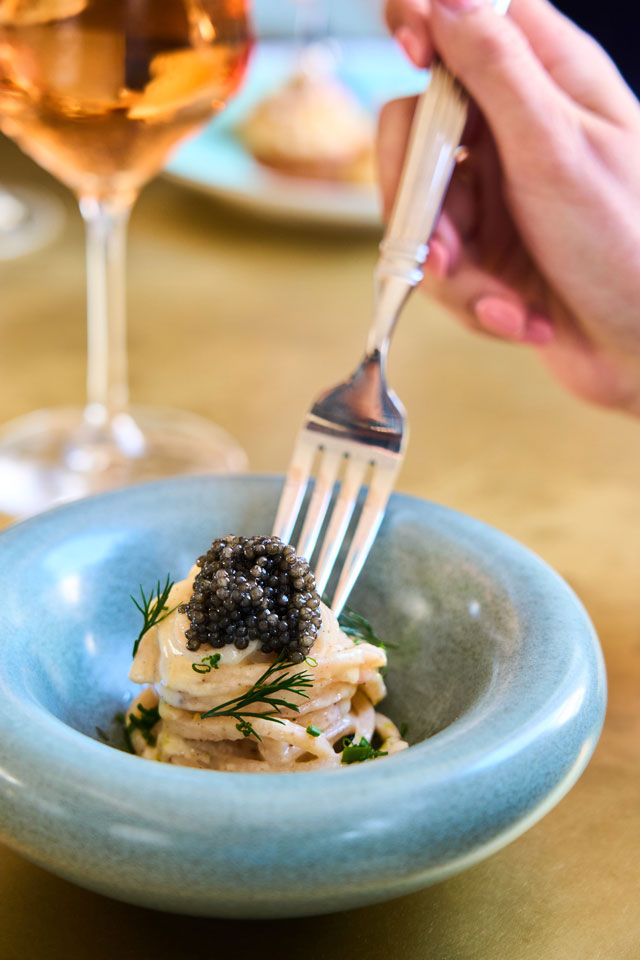
George Banks scallops glossed in truffle honey mustard over sunchoke crema beside a fried artichoke curled like a rose. Hamachi is plated with its skeleton arcing across the bowl, ponzu and pickled green tomato whipped into a briny froth. The Southern Duck leans into the restaurant’s namesake; Legami means ties, connections, its green tomato-orange chutney trading French citrus for Lowcountry acid. The shrimp and caviar dish features “pasta” spun entirely from prawns that stand in for noodles, laced in a cream sauce perfumed with lemon and vanilla. All pastas are made from scratch in-house.
The five-course Chef’s Tasting ($100 per person, whole table participation required) is the most riveting way to savor the menu, its lineup shifting with the seasons. Congiusta guides the table through each course himself—a Lowcountry ingredient he constructed around, or a technique carried from Michelin kitchens, and a childhood in Rome. Every plate unites Italy and Charleston.
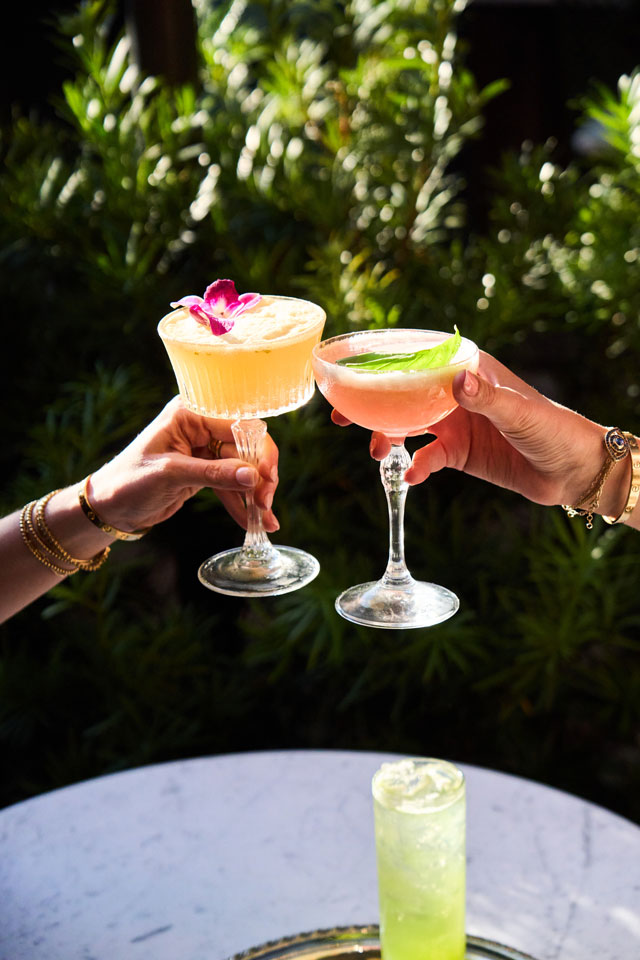
The Chef’s Tasting can be accompanied by a wine pairing, though the beverage program holds its own. The Mambo Italiano squares bourbon and Laird’s Applejack against lime, grapefruit, cinnamon, and cardamom, then tops it off with ginger beer. Or, a simple Sancerre, a 2024 Sagier Verdier from the Loire Valley.
Upstairs, the Legami Lounge channels an aging Italian villa: plastered walls and a curved pink velvet couch. The Veranda sits tented in floral fabric, and the Glass Room crowns the building with an oval marble table and a vine chandelier, inviting guests to linger.
Brunch runs Sundays, 11 a.m. to 2 p.m., best claimed at the upstairs bar with a few friends in tow. The format remains loyal to the dinner menu’s instincts, crudo and piattini up top, a full run of pastas and secondi below, but eases into daytime specifics: Steak & Eggs sliced thin and seared in white wine, an Egg Rose Toast built on focaccia and Legami’s own bearnaise, a burger under fontina and balsamic bacon jam. The bar keeps pace, pouring a Legami Bloody spiked with Italian peeled tomatoes and a rosé-forward La Vie en Rose.
Charleston’s climate barely registers as a change. Rome sits 20 minutes from the coast, Congiusta notes, “same weather, same mosquitoes.” The distance from home is the steeper adjustment, but Legami emerged to close that gap. Distance doesn’t disappear, it just gets bridged. Two years in, Legami symbolizes: Italy on one end, Charleston on the other, and a chef standing in the middle, holding them close enough to share a table.