Local Chatter: A Great Big Ten-Day Book Club
01 Sep 2026
Charleston Literary Festival delivers Southern comfort with international appeal
Sept-Oct 2026
Written By: Kristen Ness
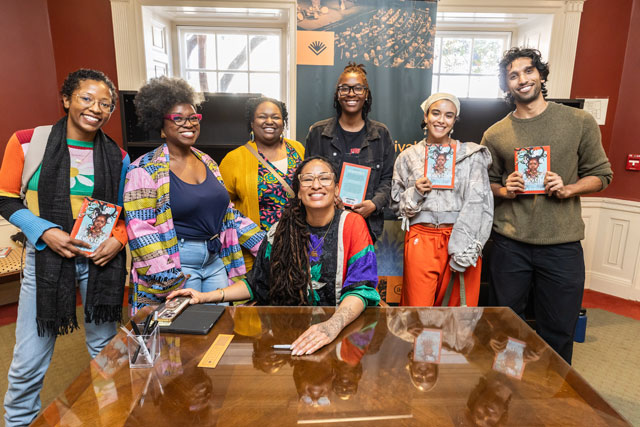
People are gathering around books. Have you noticed? We are drawn together in book clubs, book festivals, and bookstores, all with one thing in common: a book-centered sense of community. As humans, we connect and share our histories, experiences, and emotions through storytelling. Books connect us. What could be better Southern comfort than a festival rooted in the South dedicated to celebrating books?
This November 6, the Charleston Literary Festival will open its doors at Dock Street Theatre for its tenth festival of world-renowned literature and thought-provoking programming. Welcoming anyone who loves books and creative conversation, the festival invites us all to join what feels like a great big ten-day book club. Executive Director Sarah Moriarty uses words like “serendipity” and “radical hospitality” to describe what makes the festival and its host city unique. But these are also reasons for how it came to be in Charleston and why it has become one of the city’s most anticipated annual events.
To trace the festival’s deep artistic roots and fitting namesake, let’s return to where it all began.
The year is 1916. The First World War rages across Europe. Two hours southeast of London, near the idyllic English countryside village of Firle, East Sussex, sits a farmhouse called Charleston (aka Charleston Farmhouse), where avant-garde artists, writers, and intellectuals begin to meet for free-spirited artistic romps and anti-Victorian experimental thinking. They cover the walls and fixtures with their art. This collection of like-minded friends and relatives, the illustrious Bloomsbury Group, includes members such as authors Virginia Woolf and E.M. Forster, painters Duncan Grant and Vanessa Bell, biographer Lytton Strachey, poet T.S. Eliot, and economist John Maynard Keynes. Several of the founding members continue to reside there for the next sixty years.
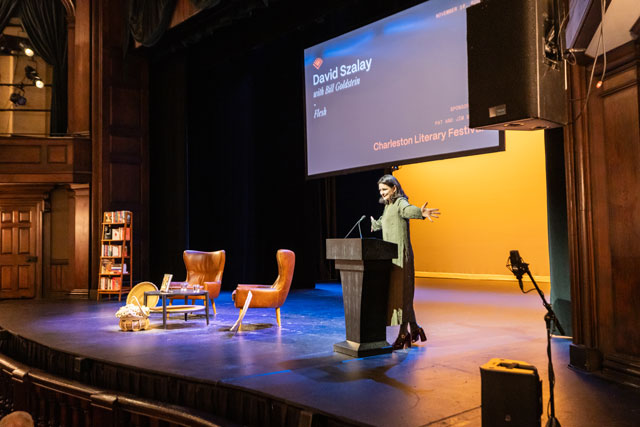
Enter Deborah (Debo) Gage, an art historian and international dealer who lived nearby. She visited Charleston Farmhouse in 1980, after the last Bloomsbury resident, Duncan Grant, had died. Appreciating that it was unique, she sprang into action with a view to preserving it and its contents for perpetuity, and opening it up to the public, and established the Charleston Trust. Soon after, Gage recruits Diana Reich as founding Artistic Director of the first Charleston Festival held at the Charleston Trust in 1990. Twenty-five years later, Gage’s ancestral family connection to Charleston, South Carolina, sparks the idea for a parallel festival in the United States. Along with Charleston resident Walter Fiederowicz, an attorney and venture capitalist, and Reich, serving as the founding artistic director, the three founders collaborated with the Charleston Trust, Charleston Library Society, and other members of the Charleston community to establish the inaugural Charleston Literary Festival in 2017.
What began more than a century ago in a countryside hideaway found a second home in our city of Charleston not only through shared names but because Charleston offers southern comfort through community, hospitality, and a sense of place. Reflecting on the growth and success of the festival since she became Executive Director in 2023, Sarah Moriarty explains the allure of Charleston.
“The city is evocative. The festival experience is incredibly intimate. We believe in this idea of radical hospitality where you come, experience something with us, and then leave a little bit altered or changed,” she says. “Because Charleston is such an intimate small place, the chance meetings generate new ideas, collaborations, and partnerships. The generative elements of the festival, thanks to how close everyone is and how intimate it is, give opportunity for serendipity.”
Even the festival’s Dock Street Theatre location in the heart of downtown Charleston creates access to authors and moments of connection between attendees that would be lost in the crowds of a larger city. And those connections exist on an even smaller scale in the many book clubs flocking to the festival in recent years. These modern-day book clubs echo the collection of friends that once formed the Bloomsbury Group, evoking the Charleston House spirit.
Moriarty delights in book club culture and encourages them to celebrate their literary communities at the festival. “We’re continuing to grow our outreach to book clubs,” Moriarty says. “Book clubs represent the heart of what the festival cares about, which is not just the presentation of the idea and the literary piece of art or the book itself, but the fact that it brings people together.”
Like the Bloomsbury Group, many book clubs have names. Some span decades. A few of Moriarty’s favorites include Read Between the Wines, The Bad Girls Book Club, That’s What She Read, and Treasures of Friendship. Book clubs can find special discounts and tailored planning tips using the book club concierge form on the festival’s website at charlestonliteraryfestival.com.
With the atmosphere of a great big ten-day book club, the tenth festival promises to blend wider perspectives with the intimacy of evocative conversation in a single setting. Guests this year include international bestsellers, award-winning authors and debut phenoms such as Barbara Kingsolver, Virginia Evans, Lily King, Steven Pinker, Tayari Jones, Belle Burden, Nelio Biedermann, Curtis Sittenfeld, Hernan Diaz and Daniel Kraus.
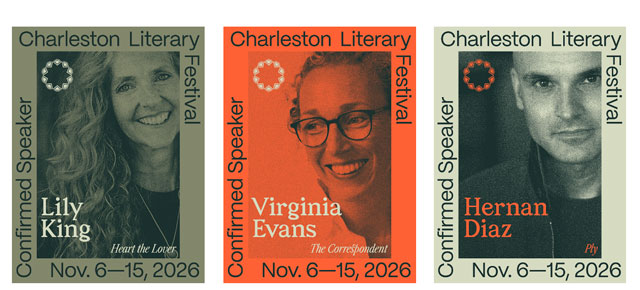
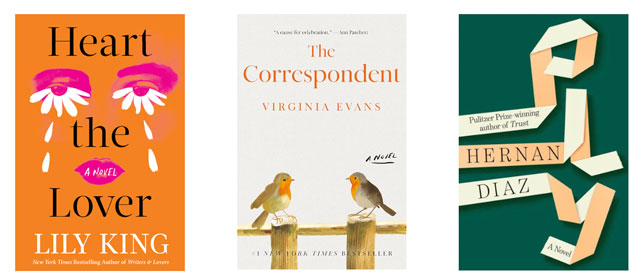
Attendees are also in for a treat with a nod to the festival’s Charleston House history. Two rare book specialists will discuss and display a first edition book from The Hogarth Press, founded by Leonard and Virginia Woolf. The festival will conclude with local actors and festival speakers walking in the footsteps of the Bloomsbury Group as they perform Virginia Woolf’s only play, a satirical farce titled “Freshwater.”
Whether you come for community, radical hospitality, elevated conversation, or simply books, Charleston Literary Festival is a great big ten-day book club worth attending.