Newsmaker: Making The Best Better
01 Sep 2026
Rochelle Riley's vision for Charleston's cultural future
Sept-Oct 2026
Written By: Julie Deacon
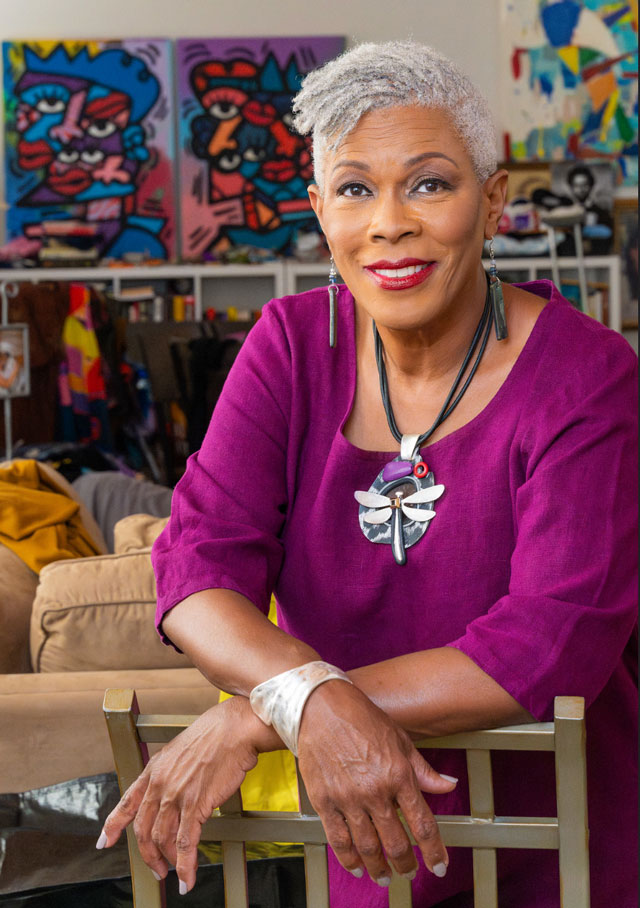
When Rochelle Riley accepted Charleston's role as Director of Cultural Affairs earlier this year, she knew it was a city with a nationally recognized arts scene and a deep appreciation for its history, and immediately identified an opportunity to strengthen the relationships between artists, cultural organizations, and the community they serve.
"I don't need to reinvent anything," Riley said. "Charleston already has incredible artists, incredible organizations, and people who care deeply about the arts. My job is to come up with ideas that make things that are already great even better."
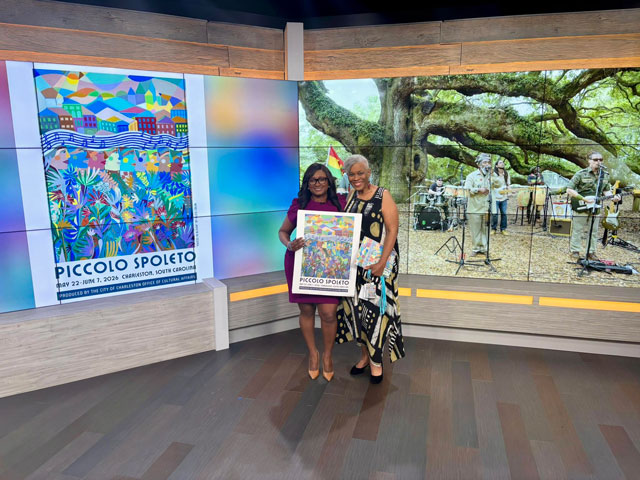
That philosophy has shaped Riley's first months in Charleston. After leading her first Piccolo Spoleto Festival this spring, she is now preparing for the city's next major cultural celebration later this month, the MOJA Arts Festival. She is guiding the programming while also building an office that will support artists not only as creatives, but as entrepreneurs, community leaders, and small business owners.
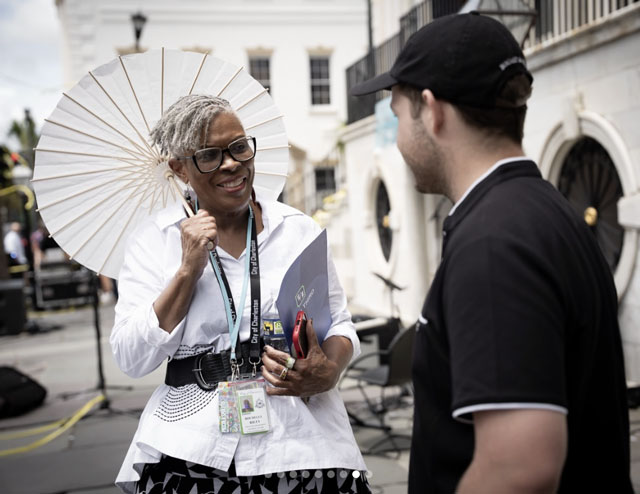
Long before she found herself helping shape Charleston's cultural future, Riley spent decades telling the stories of other communities.
"I had wanted to be a journalist since I was eight years old," she said. “Chasing that goal and career for all those years opened doors that I didn’t know were possible.”
That dream led her to the University of North Carolina at Chapel Hill before launching a journalism career that took her to Washington, D.C., Texas, Kentucky, and eventually Detroit. As an award-winning columnist who resides in three journalism halls of fame, Riley discovered journalism could do more than document events—it could inspire change.
One of her earliest lessons came while writing in Louisville, where she championed a campaign honoring boxing legend Muhammad Ali. Watching her contribution to that effort grow into what is now the Muhammad Ali Center reinforced the impact thoughtful storytelling could have beyond the printed page.
"My first column made me realize the power of crusading and championing for a cause," Riley said. "It showed me that writing can actually make a difference in people's lives. Once I understood that, I wanted every story I told to have that kind of purpose."
Eventually, Riley realized there were other ways to help communities tell their stories.
She transitioned from journalism to civic leadership, spending years overseeing arts initiatives in Detroit, where she worked alongside artists, nonprofits, and government agencies on projects totaling millions of dollars. Her work with city departments and constituents helped transform neighborhoods through public art, cultural investment, and philanthropic partnerships.
The experience also reshaped the way she viewed artists themselves.
"Artists are small businesses," she said. "They're entrepreneurs. They're creating something from nothing, supporting themselves, and often supporting other people. If we want a thriving arts community, we have to recognize that artists are also an important part of our local economy and should be a part of every conversation about workforce development.”
Charleston entered Riley's life years before she imagined working for the city.
In 2021, she traveled to Charleston for freelance marketing work with the International African American Museum. She continued returning for additional projects and eventually came simply because she loved the city. Before long, she purchased a condominium in West Ashley and began envisioning Charleston as home.
Around that same time, conversations with leaders in the city's arts community, including those connected with Spoleto Festival USA, introduced another possibility.
When the position of Director of Cultural Affairs became available, Riley was approached directly by the City of Charleston for the role. It felt like exactly the right fit at the right time for her, she says.
"I wanted to be part of a city that loves and appreciates art," she said. "Charleston already understands the value of culture. That's exciting because you're not starting from scratch—you're joining a community that already believes in what you're trying to do."
Since arriving, Riley has focused less on making immediate changes and more on listening.
Borrowing an approach she developed in Detroit, she planned community listening sessions built around three questions: What do you have that you like? What don't you have that you want? What makes you happy?
Such conversations, she said, help her better understand the people her office is meant to serve.
"If you don't know the people you're working for, you're not working right," Riley said. "Before you start making plans or creating programs, you have to understand what people value and what they want their community to become."
Charleston doesn't need to reinvent its arts community, Riley said. Instead, it should continue building on the strengths that have made it an internationally recognized cultural destination.
"To make the best better," she said. "Charleston already knows who it is. The city has such a deep respect for history, art, and music. I don't need to reinvent any of that. I want to build on it and help even more people right here and across the country experience it."
That philosophy came into focus during Riley's first Piccolo Spoleto Festival, where she experienced the breadth of Charleston's creative community firsthand. Now, Riley's attention has turned toward the MOJA Arts Festival, one of Charleston's signature celebrations of African American and Caribbean arts and culture. Her office oversees MOJA alongside Piccolo Spoleto, the annual city Juneteenth celebrations, and Black History Month programming, using each event as an opportunity to celebrate Charleston's creative community while strengthening connections across neighborhoods, cultures, and generations.
Rather than viewing each festival as a standalone event, Riley sees them as part of a larger effort to make Charleston's arts community more connected, more collaborative and more accessible for both residents and visitors alike.
Her ambitions, however, extend well beyond a single festival season.
"I don't want it to take five years," Riley said with a laugh when asked about her long-term vision for Charleston. "I want our story to be on the front page of The New York Times. I want people talking about us from around the world."
Even as she looks toward national and international recognition, Riley remains guided by the same philosophy that has defined every chapter of her career— first as a journalist, then as a civic leader, and now as Charleston's director of cultural affairs.
"It's two things," she said. "You preserve history. And you make history. Charleston has done an incredible job preserving its history. Now we have the opportunity to keep making history by investing in artists, celebrating culture, and creating experiences that people will remember for generations."
For Riley, Charleston has spent centuries preserving its cultural legacy. Her goal is not to rewrite that story, but to help shape its next chapter—ensuring the city's future is every bit as vibrant as its past.