Drinkware: Built Around the Table
03 Jul 2026
Estelle Colored Glass founder Stephanie Hall’s vision for beauty
July-Aug 2026
Written By: Emily O’Brien | Images: Estelle Colored Glass
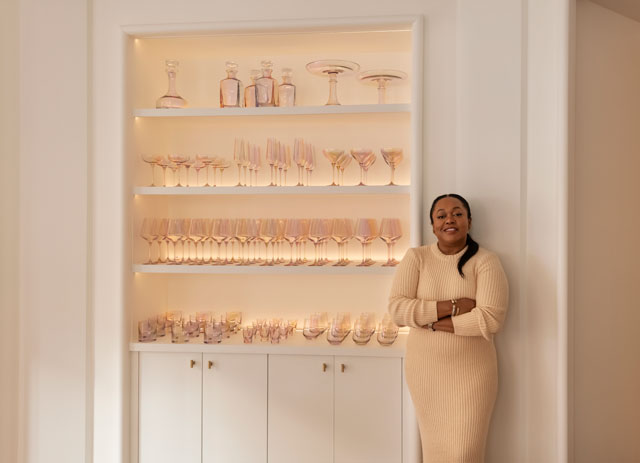
During Stephanie Hall’s childhood in Holly Hill, South Carolina, dinner followed a certain structure. In her grandmother’s house, there were two china cabinets—one for everyday meals and one reserved for Sundays or special guests. Which one was opened said something about the evening before anyone sat down.
That sense of intention stayed with her. “My grandmother taught me the art of treasure hunting,” Hall says, “and that’s something that just stays with you.” Stephanie would accompany her during the summer months, combing for finds through neighboring small towns. What began as time spent around antiques and collected objects gradually shaped how she sees beauty now: layered and a little unexpected.
Rather than a single defining moment, Hall points to a beautiful, repeating pattern. Her grandmother’s home was often centered around food and the people who came to share it. “My grandmother was like a cook’s cook,” she says. Her house was a hub for dinners and gatherings.” Family, friends, relatives passing through—there was always a reason to set the table.
A House That Was Always Ready
What made those gatherings distinct was the care behind them. Meals weren’t assembled quickly. They took time and were guided by what was in season. “She was a very disciplined, deliberate type of cook,” Hall says.
There wasn’t a single dish that defined those meals, but certain details have stayed with her—the wheat flour biscuits, the lemon pound cake, the greens prepared with precision. More than anything, it was the consistency. The table was always set. Guests were always expected. “Everything’s just so delicious with so much love put into it,” she says.
That environment shaped more than her taste. It established a way of thinking about objects—how they’re collected, how they’re used, and how they contribute to a shared experience.
Building Something That Could Be Collected
Hall began her professional life as an attorney before moving into entrepreneurship, launching an event rental company while still practicing law. Like many in that industry, she ran into the challenge of seasonality—busy stretches followed by slower periods. That led to a practical question she kept returning to: how to create something more consistent.
She started an online store, curating well-made goods and writing about them in a way that gave each piece context. But the concept felt too broad. “I just had an aha moment,” she says. Instead of offering a wide mix of products, she narrowed her focus to one category: colored glass.
It was something she had been looking for herself—a cohesive collection that didn’t require searching across multiple sources. “If I were to honor my grandmother and even my own mother, who had a curated collection of beautiful things in those china cabinets,” Hall says, “I had to have beautiful things too.”
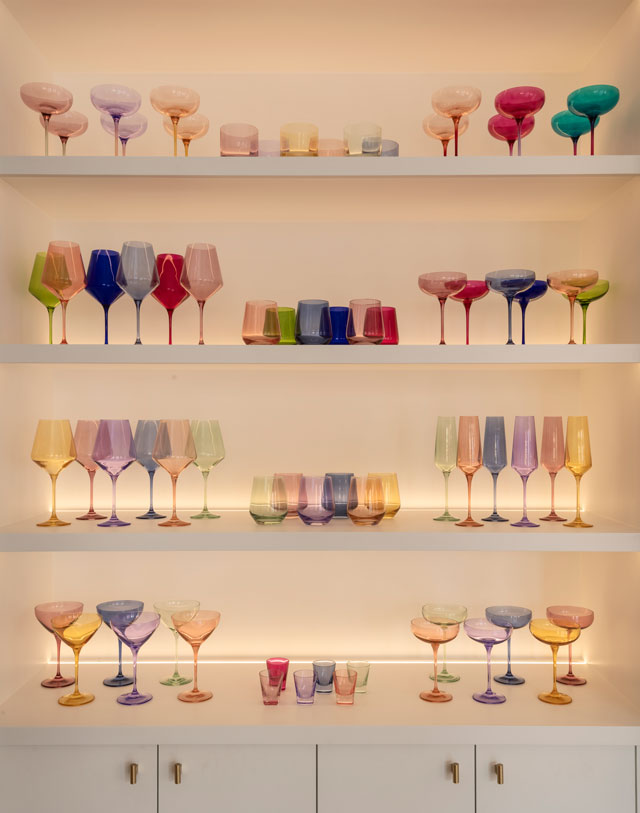
That idea became the foundation for Estelle Colored Glass. Hall worked with a single group of artisan glassmakers in Poland to produce a unified collection designed to grow over time that feels both heirloom and modern at once. “I’ve been able to have them produce whatever we want,” she says, creating a line that feels intentional and easy to build on. The line centers on hand-blown colored glassware from stemware to cake stands, items that were staples in her grandmother’s cabinets. The brand now includes a flagship store in Charleston at 236 King Street and is carried in more than 250 boutiques throughout the South.
Even as it expands, the underlying approach remains the same: pieces that are meant to be used, not just displayed.
Tips for a Well-Dressed Table
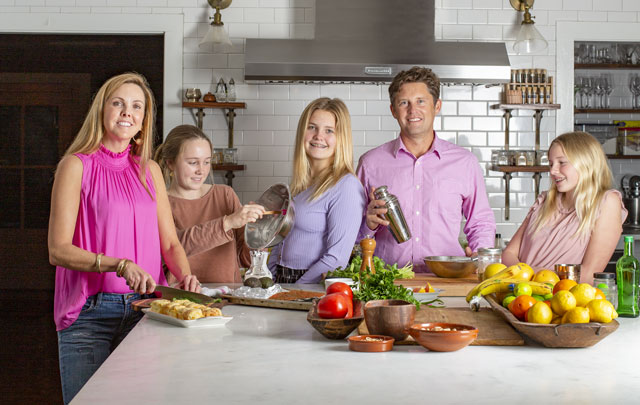
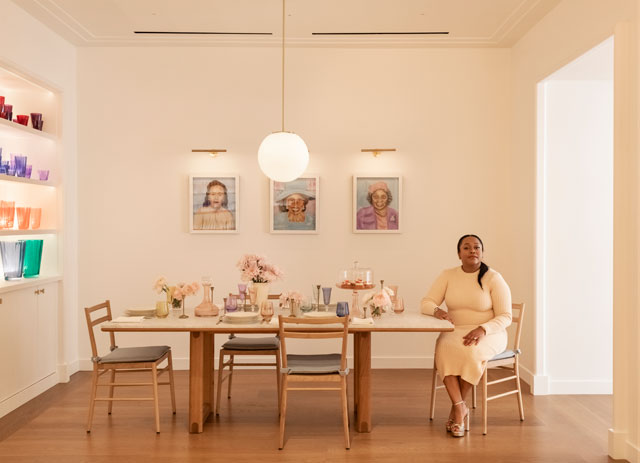
When Hall describes her ideal table, she keeps it simple: “Something that’s designed for good conversation.”
Florals are simple and kept low enough that people can see each other across the table. The food follows the same philosophy—seasonal, straightforward, and not overworked. “I don’t like things that are too fussy,” she says. “I like good ingredients.” The objects play a role, too, part of what makes the setting feel considered, personal, and worth gathering around.
The details matter, but they aren’t the point. What stays with her, and what she hopes carries through to others, is the feeling those gatherings create. “I think the thing about entertaining for me and being at the table is the conversations,” she says. “That’s the lasting impact.”
In that sense, the glassware is just one part of a larger picture. It reflects a way of thinking about home and hospitality that began long before the business itself—one shaped by routine, care, and the understanding that the table is where people come together, again and again.