From Navy Yard to Design Destination
01 Sep 2026
Where design, art, industry, and business all belong together
Written By: Maura Hogan
On a once-shuttered stretch of Storehouse Row at the Charleston Navy Yard, the world’s most irresistible and meticulously realized treasures await. Cavernous, sun-filled rooms that were for years devoted to military equipment and government paper-pushing have come together as the Charleston Design District. Up and running since 2025, it has reanimated the long-fallow former Charleston Naval Base and added new luster to Charleston’s status as a tastemaker. Encompassing both the multi-phase development of Navy Yard Charleston and Navy Yard Industrial Campus, the Charleston Design District is a linchpin of an ever-evolving, mixed-use neighborhood converging history, innovation, and high style.
Top of the trade
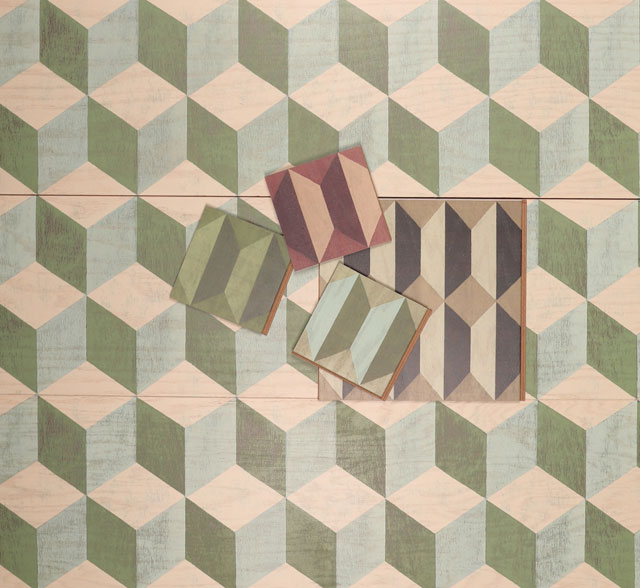
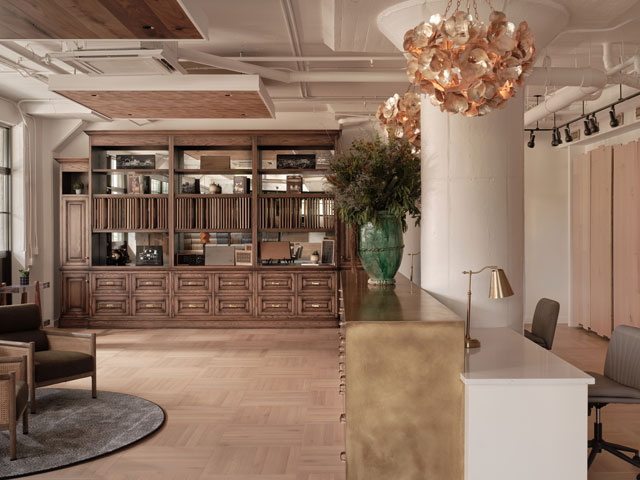
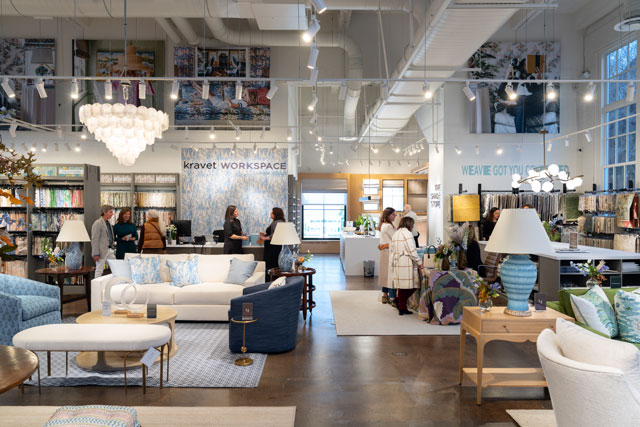
Set your sights on one of these first-to-market showrooms, and you’ll find the evocative florals or enduring patterns of Schumacher. In another, admire the rich grains and parquets of Textures hardwood flooring. Yet another trumpets the latest from Kravet, the heralded manufacturer transporting wallcoverings.
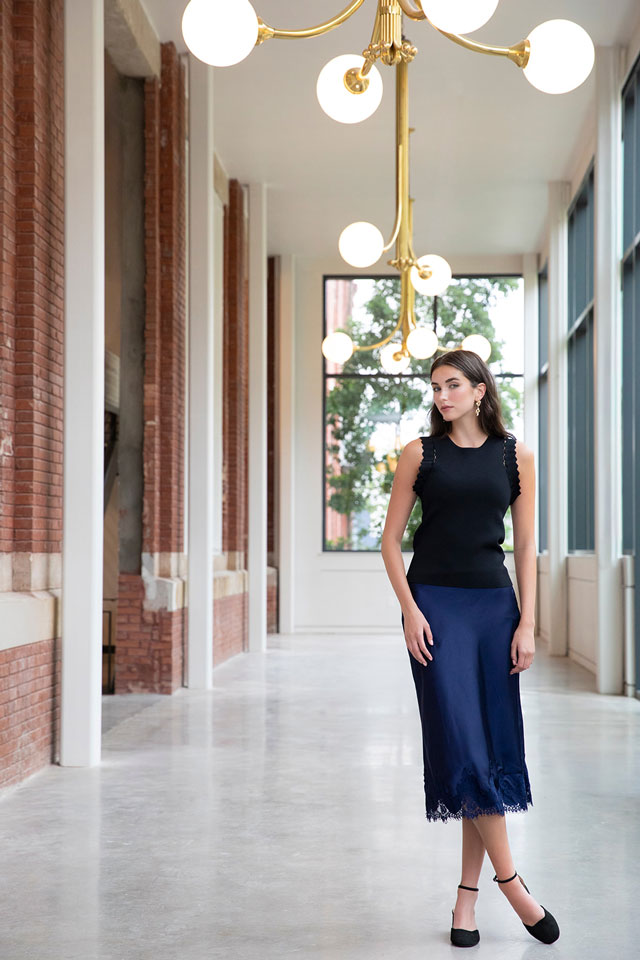
In another sweep of square footage, you can survey the industrial-chic factory of The Urban Electric Co., the Charleston-based manufacturer of exactingly crafted lanterns and pendants and sconces that are the hallmark of the luxury lighting fixture company.
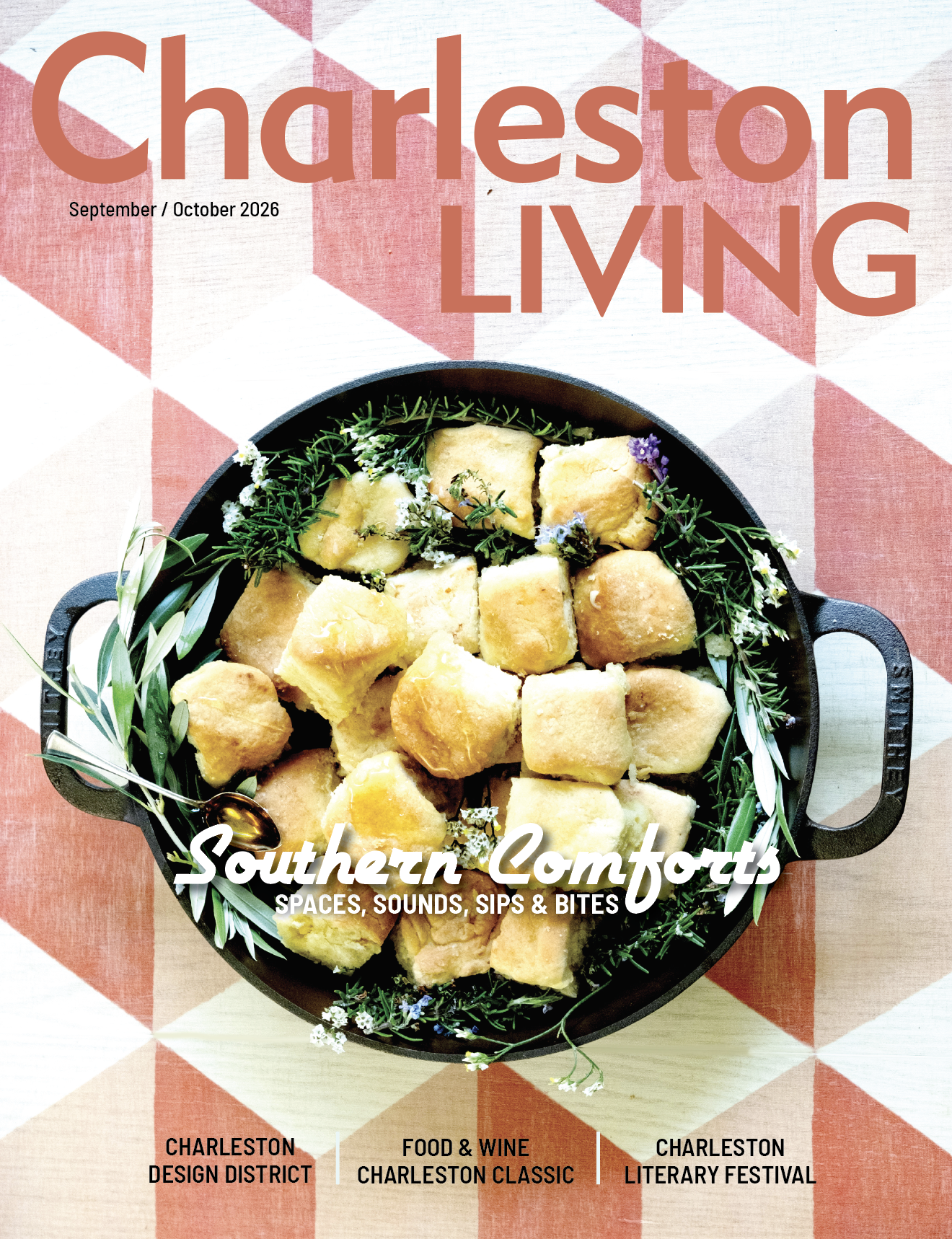
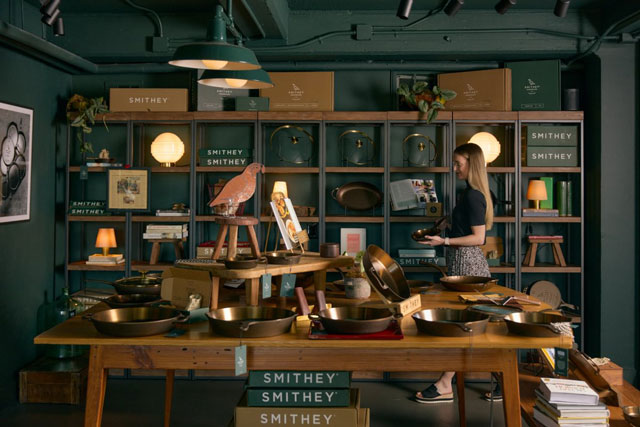
Peppered through the buildings are local makers, too. For starters, there is the cast-iron burnish of Smithey Ironware, the burled wood and steely blades of Middleton Made Knives, and the unerring eye of the design collective Fritz Porter. More have recently joined, including Hue & Dot by Mirth Studio, Zuma Imports, and Phillip Jeffries.
Designing minds
Launching in 2025, this design-minded enterprise is arguably long overdue in the region. Style has long been a civic hallmark, after all, a notion evidenced by Charleston-centric gleaming coffee table books and social media feeds. The Design District’s North Charleston home is also a response to the creative surge that area has experienced in recent years. And the new design hub has gained momentum quickly.
“It just took off, and everybody was so excited about it,” says Lucille Cogswell, president of WECCO Development, a local real estate development, investment, and consulting company, and a primary partner in Navy Yard Charleston.
On a late June afternoon, Cogswell smiles warmly in their brightly lit office in Storehouse 8, standing in welcome before a scale model of the Navy Yard Charleston redevelopment. Its sleek white structures converge in a purpose-built, storybook village, a style-minded Utopia for those in Charleston craving refined design, but also community.
Cogswell knows a thing or two about beauty herself, having previously focused on historic rehabilitation projects like the Cigar Factory on peninsular Charleston. At that time, she was working with her partner, husband William Cogswell, the current Mayor of the City of Charleston, who stepped away when he was elected. Now, she serves as the Charleston go-to person for the expansive North Charleston endeavor.
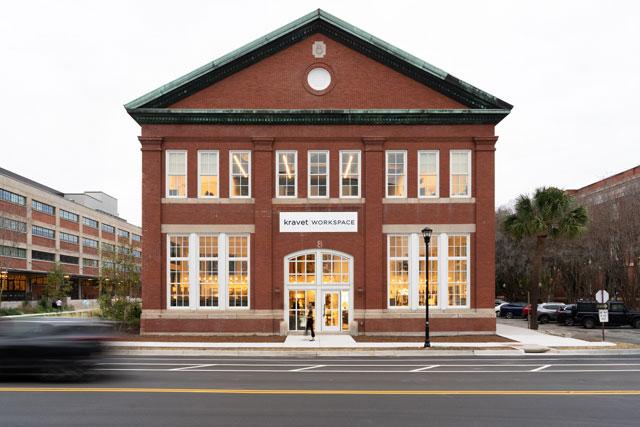
WECCO forged a partnership with Jamestown, a real estate investment and management company based in Atlanta, Georgia, after the City of North Charleston released a request-for-proposal for the 70-acre Battery Park redevelopment project as a single, expansive effort. Rather than vie for it, the erstwhile competitors decided to join forces, folding in Weaver Capital Partners as well.The result is a mixed-use redevelopment that celebrates both the property’s distinct historic buildings while repurposing them as showrooms, local businesses, dining spots, and more. Focusing on Noisette Boulevard as its main street, the aim is to create a neighborhood vibe. To spark it, Charleston Design District presents programming connecting the various showrooms and spaces and cultivating engagement between designers and the public.
Design is the secret sauce of this neighborhood vibe. The buildings were originally slated by the partners as office space, but when that market lost steam, it made way for the current concept: a destination where trade professionals can source products from a centralized location and avoid having to travel to fill their needs.
A design-forward development is also well-trod terrain with Michael Phillips. As president of Jamestown, he has already demonstrated his built-environment mettle at Boston Design Center (BDC) in Boston, cultivating relationships with the prestigious companies now elevating Charleston Navy Yard, among them Schumacher and Kravet. Phillips has driven inspired place-making via projects including Chelsea Market in New York City and Ghirardelli Square in San Francisco.
Phillips reasons that Charleston’s central location between Jacksonville and the Outer Banks, coupled with its rich architectural heritage, makes it well-positioned as a convergence point for coastal contemporary design forms and European-inspired classical architecture.
“I think beauty and the pursuit of beauty is definitely not insignificant,” Phillips says of his overarching impetus for his inspired, even enlightened, development initiatives. He’s drawn to the challenge of reimagining physical spaces, particularly places like the former naval base that fulfilled one purpose for generations but required a new vision.
“The through line is community, which I think is a terribly overused word by many people who don't know what that means,” he said. “But I think it is ultimately something that gives people a contextual understanding of place and their sense of belonging to it.”
In the mix
There’s more than meets the designer, too.
Alongside Storehouse 8, Second State Coffee pleasantly hums with clientele. On top of the storehouse, the rooftop restaurant Riva Mare by Steve Palmer of The Indigo Road Hospitality Group courts locals with its Italian-accented seafood and lacquered orange palette.
In recent years, the raw space of Building 64, half a block away, has been an eyeful, too, regularly enlivened with dynamic murals, added by cultural partners who host outsize events gathering thousands, among them the annual visual arts-powered KultureKlash.
And there are the people, a range of residents who call the Storehouse upper-floor units with their urban edge home.
“It has really been an eclectic mix in a fun way,” she says.
A boon of a base
To borrow from architectural jargon, the bones of the Charleston Design District are as structurally impressive as they are storied.
In 1901, when the U.S. Navy established the Charleston Naval Base, it not only offered a strategic stronghold along the Eastern Seaboard, but an economic boon for locals, employing 26,000 people during peak production years.
During World War II, it was the stuff of local lore, as the enlisted filled Charleston venues and danced with local girls at social functions, all with German U-boats looming close by. For decades, the base endured as a place of pride for Charlestonians, a thriving testament to the area’s purchase and prominence in the American dream.
Its closure in 1996 was felt and grieved. In 2006, 57 of its buildings were listed together on the Charleston National Register of Historic Places as the Charleston Navy Yard Historic District. A portion of Chicora Park, designed by the celebrated Olmsted Brothers in 1899, is still enjoyed today.
Plans are already underway for a rehabilitation of part of Navy Yard Charleston. The team now plans to keep restoring the various buildings, having purchased the storehouses and the 1909 Powerhouse.
Among them are the Three Sisters. Gradually
and methodically, each realized project will breathe new life into the beloved base while also adding value and beauty to the area.
“For us, design and art and industry and business all belong together,” Phillips offers. Sounds like a match made for Charleston, too.
For more info go to: navyyardcharleston.com and charlestondesigndistrict.com.