Small Batch: Crafting Charleston
02 Sep 2026
Stories of vision, resilience, and the people behind local breweries and distilleries
Sept-Oct 2026
Written By: Liesel Schmidt
Today, craft breweries and distilleries are woven into the fabric of communities across the country. But before the early 2010s, they were still largely viewed as a niche pursuit. It wasn’t until public perception changed, legislation loosened, and operations were allowed to scale beyond garage-based brewing and distilling that the craft beverage industry truly began to take off. As more consumers embraced the unique flavors, quality, and ingredients of these artisanal brews and spirits, industry giants found themselves competing with independent makers to reshape the drinking culture across the nation and in cities like Charleston. But just who are these intrepid individuals behind the labels we’ve come to know and love? Here’s your peek behind the curtain—at the vision and determination of these craftsmen that transformed a passion into a thriving business—and the stories that continue to inspire them. Cheers!
Holy City Brewing
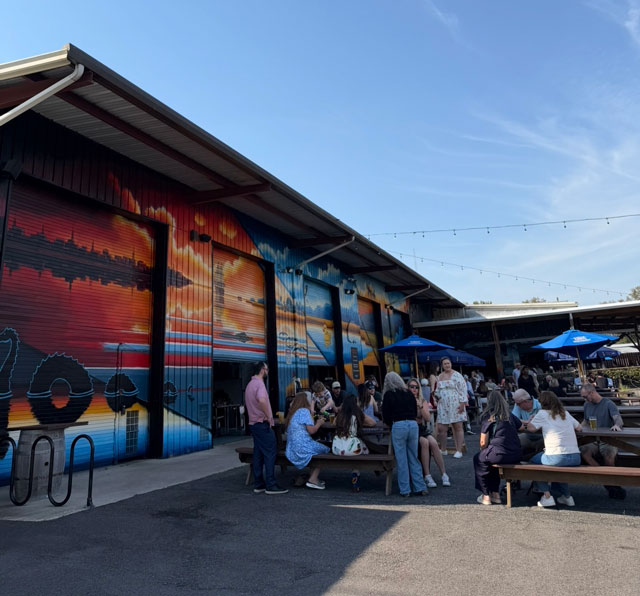
Founded in 2011, Holy City Brewing traces its roots to 2009, when Chris Brown returned to Charleston after several years in Atlanta, Georgia. A College of Charleston graduate, Brown studied brewing science at the American Brewers Guild and honed his craft at Gordon Biersch, where he gained firsthand experience in brewery operations. He moved back with the intent of opening a brewery of his own—and that goal was realized when he met his current business partners.
“One of them owns pedicabs and rickshaws downtown, so we started brewing in the bike shed there,” Brown recalls of the early days. “After a little while, we reached out to the Charleston LDC (now called the CLIMB Fund) looking for a loan to get a brewhouse, and things just snowballed from there.”
A science nerd, Brown may not use his BS in geology in his day-to-day work, but as a brewery owner, he has plenty of other opportunities to geek out. “Being able to break a beer down to times and temps at a granular scale is fascinating,” he says.
Naturally, as the brewery grew, there were some learningcurves and challenges along the way. “You learn to never say never,” Brown says. “You need to be open to change and ready to roll with the punches. Something always breaks down or goes wrong, and you’ve got to be able to adapt when that happens.”
For Brown and his partners, building a team was a big part of that adaptation. “I've learned a lot by having smart people around me,” says Brown. “We are more efficient and produce a more consistent product because we’ve surrounded ourselves with talented people who share the same commitment to quality and care about the work.”
On a personal level, if you ask Brown what beer most represents Holy City’s philosophy, his answer is unsurprisingly logical if not sentimental: “Pilsner. I learned to brew German lagers, so pilsner is kind of my baby. A pilsner spends eight weeks in a tank. About two in fermentation and six in a horizontal lagering tank. It takes time—and you can’t cut corners.” Science and passion, together at their finest.
Holy City Brewing is located at 1021 Aragon Ave, North Charleston, SC 29405. For more information, call 843.459.2948 or visit holycitybrewing.com
Nippitaty Gin
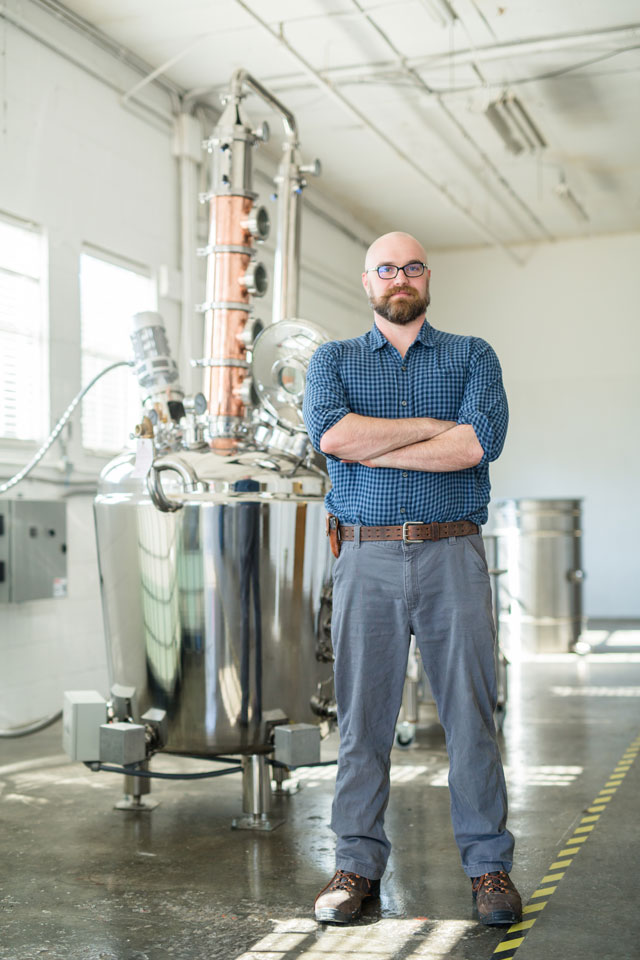
Since the word ‘nippitaty’ went out of vogue somewhere in the 16th century, most of us have never heard of it. But for founder Traxler Littlejohn, it was everything he could want in a name for his craft gin: unique, quirky, and descriptive.
“It means ‘a particularly good and strong liquor,’” says Littlejohn, who distilled his first bottles in 2018. Formerly a human resources director at a hospital, he always loved working in the kitchen and began experimenting with fermenting his own beer—until it began showing on his waistline. Inspired by gin’s similarity to beer in its range of flavor and complexity, he pivoted and began to focus on creating a balanced, high-quality liquor for people who normally shy away from juniper-heavy varieties.
A one-man show, Littlejohn filled every role to get his dream off the ground. After surviving the first two years, COVID upended the world and stalled his plans for the fledgling gin label. Serendipity hit when he was approached by MUSC to supply them with alcohol-based hand sanitizer—a product that he could readily supply, as a small-batch distiller.
Over the next year, Littlejohn’s gin production was superseded by his pandemic production, which he supplied to various local hospitals as well as individuals and a few major distributors. “It kept our doors open,” he notes. “We stayed alive.”
It was a business strategy—but it was also a moral one. Having worked in healthcare, Littlejohn wanted to do everything he could to support frontline workers—so he kept his prices lower than everyone else. By the time the pandemic was over and things began moving forward, Littlejohn found himself in a personal quagmire that could have ended everything he’d built. Instead, he persevered, scaling Nippitaty Gin's production and expanding its distribution to bars and restaurants across Charleston.
Branded with a cicada, Nippitaty Gin is Littlejohn’s story in a bottle—a tale of passion, struggle, loss, and determination. “Cicadas are a symbol of rebirth,” he says. “Every few years, these loud, beautiful creatures emerge from the ground and shed their shells. It’s a powerful symbol for what I’ve gone through with this company. I’ve learned to find peace in the noisy years and the quiet ones.”
Follow Nippitaty Gin at @nippitatygin.
Striped Pig Distillery
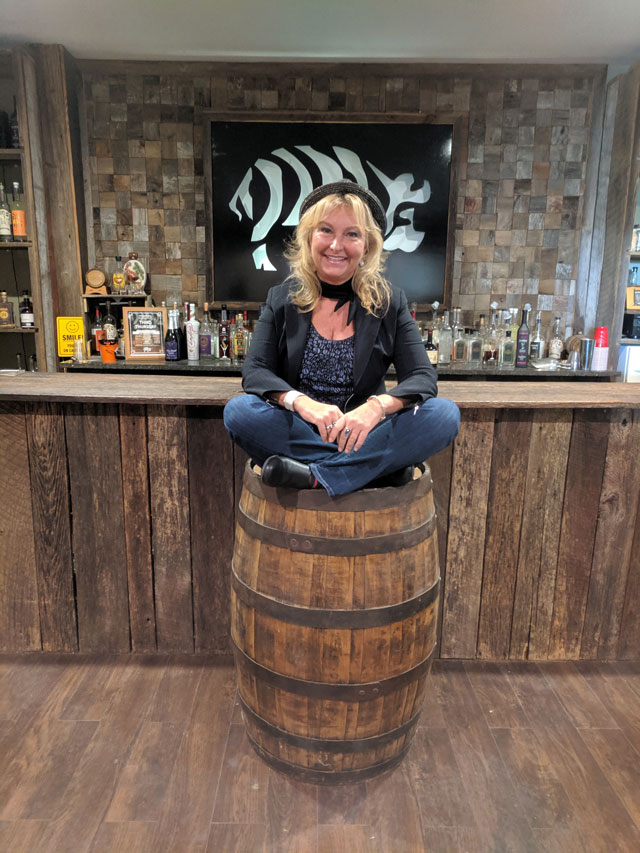
A serial entrepreneur who loves a good story, “Pixie” Paula Dezzutti’s decision to own her own distillery was less about the liquor itself and more about its history. “Whiskey carries time,” she says. “It remembers the grain, the barrel, the people who make it, and the people who eventually gather around it. I realized whiskey—especially bourbon whiskey—could do what I’d always tried to throughout my career: create conversations that would never have been had. That’s when it stopped being a product and became a language.”
After founding Local Choice Spirits in 2010 and building a portfolio of brands, Dezzutti ultimately acquired Striped Pig Distillery and took over operations, bringing that philosophy to a distillery of her own. Having long been a part of Charleston’s business scene, Dezzutti recognized a void in the landscape. “I’ve never been interested in accepting the world exactly as I found it,” she says. “I look for what’s missing or overlooked, and what conversations haven’t happened yet. Charleston had world-class food, hospitality, and history—but no focus on a story around the tradition of spirits. I recognized that void and believed we could help write the city’s next chapter.”
Inspired by the infamous Striped Pig hoax that thwarted the Fifteen-Gallon Act of 1838, the distillery’s name embodies the same love of storytelling that has defined the brand from the beginning. “The name is a reminder that innovation often comes from people willing to challenge convention,” she notes. “That spirit of resilience, creativity, and reinvention still defines us today. I believe we helped reconnect Charleston with a piece of its own history.”
As the distillery’s owner and CEO, Dezzutti embraced the Striped Pig Distillery story because “Charleston deserved its whiskey story back. When Striped Pig opened in 2013, it wasn’t simply opening another business. It was helping craft Charleston’s first distillery since Prohibition.”
Thirteen years after opening its doors, Striped Pig Distillery continues to stand apart—not simply because of what it makes, but because of the culture it has created. “We are story-driven, family-owned and women-led,” says Dezzutti. “We are unmistakably Charleston—it’s not just a backdrop, it’s an ingredient. Four generations of our family have worked together here, and visitors don't feel like customers—they feel like guests.”
That philosophy extends well beyond the bottle, finding its fullest expression in Striped Pig’s “What’s Your Whiskey Story?” private barrel experiences, which Dezzutti says are all about creating memories, establishing traditions, and celebrating milestones.
“Every barrel holds another story waiting to be told,” she says. “Every guest brings another chapter. Every conversation has the potential to change someone's life. We don’t make whiskey to fill glasses. We make it to fill tables and hearts.”
Striped Pig Distillery is located at 2225-A Old School Drive, North Charleston, SC 29405. For more information, call 843.276.3201 or visit stripedpigdistillery.com