Art of the Hunt
05 Jan 2026
Meet the artists at SEWE
Charleston Living Magazine January-February 2026
Written By: By Daria Smith | Images: Photos courtesy of Southeastern Wildlife Exposition
Each February in Charleston, the wild slips in through the ballroom doors of The Charleston Place. At the Southeastern Wildlife Exposition (SEWE), falcons share airspace with chandeliers, retrievers nap beneath linen-draped tables, and paintings of marsh, forest, and far prairie turn hotel corridors into migration routes. When SEWE returns this February, Florida painter Henry Von Genk III will capture that feeling in “Charleston Splendor,” his luminous vision of a white heron at dusk that will anchor this year’s poster and VIP Gala auction.
Yet the story of SEWE is bigger than one canvas. Across the exposition’s five downtown venues, painters and sculptors arrive with field notes still under their fingernails and mud on their boots. They “hunt” in their own way, tracking light, movement and the fragile habitats that hold both. Beyond decorating walls, their work raises money for conservation, reframes misunderstood species, and invites viewers to step into a landscape long enough to care what happens next.
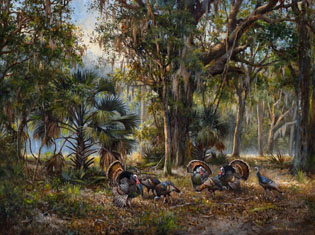
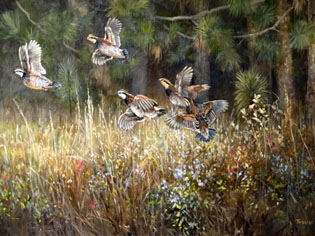
Thomas Brooks
For Florida painter, Thomas Brooks, inspiration sometimes arrives in blue jeans rather than brush pants. He and his wife were walking their little chihuahua when a sudden explosion of wings rewrote the day. “She flushed up a large covey of quail right in front of us. It startled us, and that experience inspired me to paint a covey rising up.” That surprise, the jolt of the wild in an ordinary moment, is what he chases on canvas. Brooks builds mood through value and color rather than fussy detail, guided by a mentor’s advice that he would “rather paint the movement of the bird rather than every feather.” Years of field observation and a long partnership with the National Wild Turkey Federation have honed his eye. When viewers tell him they feel as if they can walk into one of his scenes, he knows the painting has accomplished its quiet conservation work.
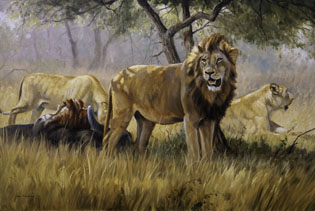
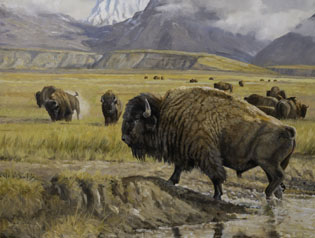
Grant Hacking
Grant Hacking grew up in South Africa, so focused on wildlife that he barely noticed the backdrop. That changed when he first drove through Yellowstone and on to Salt Lake City, stunned to find the landscape every bit as compelling as the elk and buffalo. It reset his priorities. Today, his canvases weave animal and atmosphere into one sweeping narrative. “When choosing a subject to paint, the most important thing for me is the lighting,” he says, chasing the cast of antlers across a neck or shadows striping a lion’s shoulder. As the official artist for International Wildlife Crime Stoppers, Hacking channels drama into purpose, creating pieces that help fund anti-poaching efforts and reframe hunting as a tool for stewardship rather than exploitation. Whether he’s wrestling a monumental African Big Five composition into harmony or painting a lone bald eagle over American river country, his work invites viewers into an “emotional bridge between humans and animals” that he believes still lives in all of us.
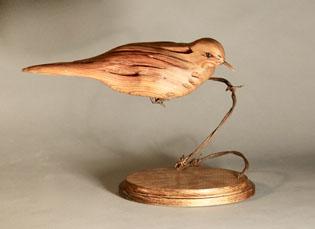
Blaise Lareau
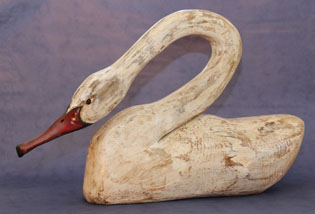
In Blaise Lareau’s Sumter studio, wild birds begin as beams that once held up Georgian houses and barn roofs. He carves not to mimic feathers, but to distill a bird to its essential gesture. “I work in wood because of its natural beauty,” he says, fully aware that the material’s limitations shape his choices. Dense winter growth rings and softer summer grain dictate knife pressure, the sweep of a neck, the angle of a folded wing. Hyperbole becomes his field guide: a swan’s neck made even longer, a shorebird’s bill gently bent, just enough to cue recognition. The result is a modern, timeless sculpture, linking a living ibis or egret back to trees that may have been standing when Columbus crossed the Atlantic. Lareau does not claim the mantle of activist, yet he admits that if someone “sees or owns these birds in art form, it might be a reminder of the treasures nature brings us,” then the work has done something akin to conservation.

Liz Lewis
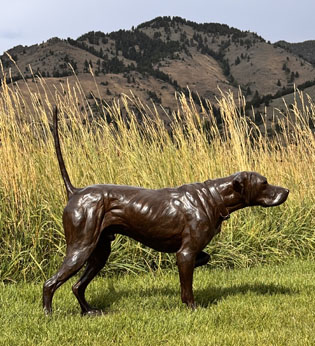
For Montana sculptor and longtime sporting guide, Liz Lewis, every role she has played outdoors feeds the next piece of bronze. “You don’t understand the biomechanics and anatomy of an animal intimately unless you have lived with them,” she says, ticking through years of running pointing dogs, rowing clients down trout rivers and putting her hands on harvested game. That lived knowledge animates what she calls “situational bronzes,” like the piece that freezes the instant her husband leapt from a raft, net in one hand, boat rope in the other, to save a child’s runaway rainbow trout. Scientific accuracy matters, but never at the expense of that electric second before a covey flushes or a bird dog slams into a point. Her partnerships with groups like the Ruffed Grouse Society and Pheasants Forever turn those moments into awards and fundraising pieces that support habitat on the ground, ensuring that the public-land coveys she cherishes remain truly wild.
Julie Jeppsen
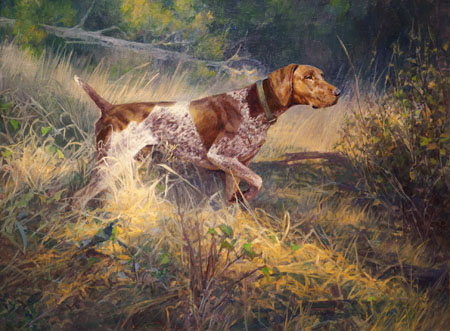
Raised on Western ranches and, later, mother to a wolf named Arctic, Julie Jeppsen paints from the inside of the story. Years of watching antelope move freely across family land where they were never hunted, and hiking with a wolf who patrolled her children like packmates, taught her to see beyond the stock image of predator and prey. When she begins a canvas, she cuts off the noise of the world and drops into a creative depth. “I just dive down into what I call a well,” she explains. Down there, she builds scenes from a puzzle of field sketches and photographs until the hush of a timberline or the tension in a whitetail’s shoulder feels exactly right. Her work for organizations like the Rocky Mountain Elk Foundation and Park Cities Quail Coalition channels that intimacy with wildlife into conservation dollars, while her wolves, elk and bird dogs invite collectors to reconsider animals too often reduced to caricature.