
Courtside Charleston
08 Mar 2026
How Credit One’s Charleston Open became one of the premier tournaments in women’s tennis
March-April 2026
How Credit One’s Charleston Open became one of the premier tournaments in women’s tennis

By Emily O’Brien
Each spring, Charleston becomes the center of the women’s tennis world in Daniel’s Island, drawing elite athletes, tens of thousands of fans, and international attention—while remaining distinctly Lowcountry.
Now in its 26th year in its current location, the Credit One Charleston Open has cemented its reputation as a leader in women’s sports. From offering women the same prize money as men at comparable tournament levels to cultivating a skyrocketing attendance base, the tournament continues to set standards rather than follow them. Backed by Beemok Sports and Entertainment—who owns and operates the Charleston Open as well as the Cincinnati Open, one of the sport’s premier ATP and WTA 1000 events—the Charleston tournament benefits from deep professional expertise. At the helm is Bob Moran, president of Beemok Sports and Entertainment, whose approach to growth is rooted in a simple philosophy: lead with intention, invest in people, and never stop improving.

Leading on Equal Prize Money
The Credit One Charleston Open made a bold move by committing to equal prize money for its WTA 500 event—ahead of many tournaments at the same level. While all four Grand Slams now offer equal pay, parity at the WTA 500 level is still rolling out tour wide.
“For us, it’s twofold,” Moran says. “First and foremost, it’s important to us that we always lead the way.”
Leadership has long been part of Charleston’s tennis DNA. Founded in 1973, the tournament is one of the oldest on tour and has consistently pushed boundaries. “We were the first tournament to offer $100,000 prize money and the first tournament to offer $1 million in prize money,” Moran notes.
The decision was also influenced by the tournament’s title sponsor. “We have a partner in Credit One Bank who wants to make a difference,” Moran says.
That financial support matters most beyond the spotlight. “It’s less important with the top players and probably more important with the lower-ranked players and qualifiers,” he explains. “It helps them make it through a year a little bit better.”
For former players, the impact of these changes is also deeply meaningful. Retired stars like Shelby Rogers and Alison Riske-Amritraj note that offering equal pay at a WTA 500 event helps support the next generation of athletes, making the realities of tour life—travel, training and expenses—more sustainable and fair.
“The Credit One Charleston Open, its ownership, and executives have always been leaders for the WTA Tour as a whole. Equal prize money to men at the 500 level is a major step forward for players and our compensation,” say Riske-Amritraj. “I always believed that this day would come, and I am so proud it’s going to begin in Charleston.”
Rogers echoes that sentiment. “There are many more steps to take, but this sets such a strong precedent within the sport of tennis and is so inspirational to other women’s sports across the globe,” she says. “I can’t wait to see what else the future holds for women’s tennis and am happy to be a small part of continuing to push the needle in that right direction.”
In 2026, the winner’s prize money will more than double—from $164,000 to $354,000. Qualifiers and early-round players will also see meaningful increases, with first-round earnings rising from $6,400 to $13,800. “Not only are we affecting the top of the chain, but we’re also affecting the bottom of the chain,” Moran says.
In addition, 20 percent of the prize money increase—approximately $200,000—will go directly into the WTA player pension fund. “The lifecycle of a player is very short,” Moran says. “If we can make sure we’re also looking out for their greater good in the future, that’s important to us, and it’s important to the players.”
What makes the move especially meaningful is that it was player-driven. Moran says the players could have easily asked for everything to go into prize money, but they chose to invest in their future instead.

Growing a Charleston-Style Fan Experience
Attendance at the Credit One Charleston Open has grown to nearly 90,000 fans, a number Moran attributes to constant reinvestment in experience. “Quite honestly, we just keep investing,” he says. “Our player experience, fan experience, volunteer experience—anything we can positively affect.”Beyond on-site amenities, partners like Credit One Bank and other tournament sponsors support community programs such as youth tennis initiatives and special access days for juniors and military members, expanding the event’s impact beyond tournament week.
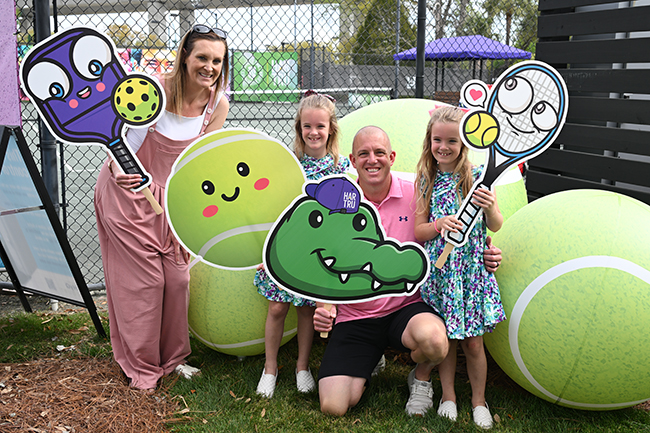
Today, the grounds offer far more than world-class tennis. Elevated food and beverage programs, live music, player interviews, pickleball and padel courts, and interactive fan zones create an atmosphere where spectators linger.“They spend a long day with us,” Moran says. “They can’t watch tennis the whole time, so we have to make sure we’re really creating an atmosphere.”
Listening is key. The tournament conducts extensive post-event surveys, using fan feedback to guide improvements. “They tell us what’s important to them, and we try to provide that,” Moran says. “If we keep making the experience better, that word spreads pretty quickly.”
Technology has also enhanced the on-site experience, from a robust mobile app to real-time scheduling, autograph sessions, and event updates. “We want that experience to be seamless,” Moran says, “while still keeping that warm, friendly Charleston feel.”
Tournament of the Year—Four Times Running
That balance of hospitality and excellence has earned the Credit One Charleston Open four consecutive WTA 500 Tournament of the Year awards.
Players frequently point to Charleston’s atmosphere, organization, and Southern hospitality as key reasons the event stands out, describing it as both welcoming and highly professional.
Moran credits both people and infrastructure. Recent upgrades include new locker rooms, workout facilities, dining spaces, and player lounges—designed to make athletes feel at home during a demanding tour schedule. Still, Moran says the most meaningful feedback is simple. “They love the people,” he says. “That shows through, and that makes us very proud.”
Looking Ahead
Supported by Beemok owners Ben and Kelly Navarro, Moran’s marching orders are clear. “It’s about creating wonderful experiences,” he says. “Whatever it takes to make this better, we do.”
Looking forward, fans can expect expanded racket sports, continued pickleball growth, youth engagement, and creative ways to introduce men’s tennis legends into the Charleston experience. “We want to continue to put rackets in the hands of people and kids while they’re here,” Moran says.
More than five decades in, the Credit One Charleston Open remains both timeless and forward-looking—rooted in Charleston’s hospitality, while setting the pace for women’s tennis internationally.