Shokudô Brings the Heat to Upper King
05 Jan 2026
A robata-fired ode to Japanese comfort cooking
Charleston Living Magazine January-February 2026
Written By: By Daria Smith | Images: Photos by Andrew Cebulka
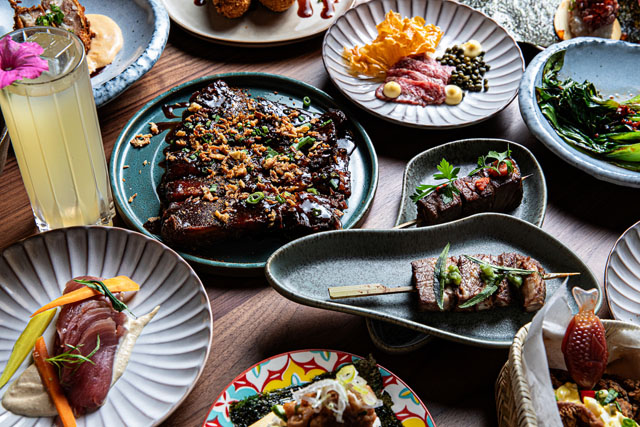
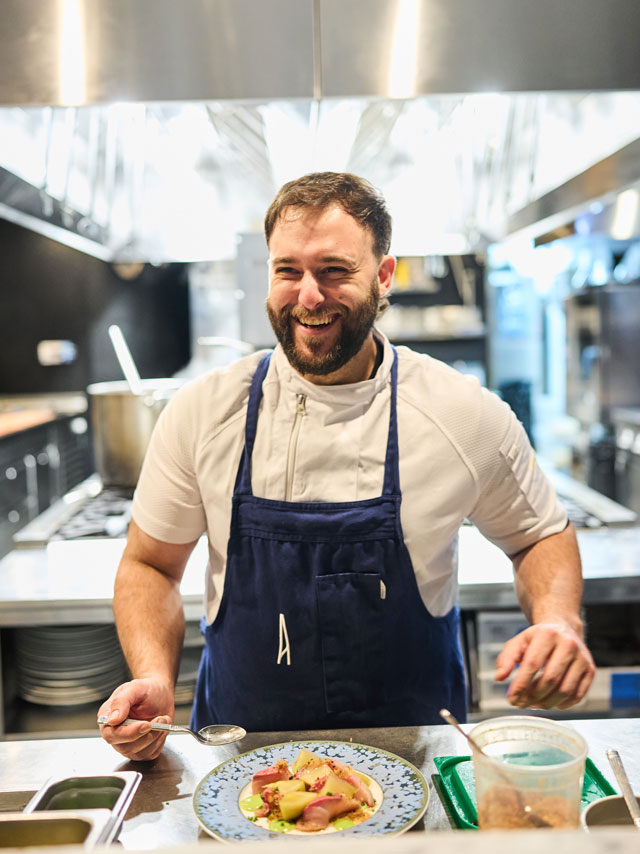
The first thing you notice at Shokudô is the smoke—the fragrant curl that rises when fat meets heat, drifting from the dual robata grill that anchors this modern Japanese tavern on Upper King. Opened in the former Maya space last October, the restaurant hums with glowing coals and a warm, woody perfume that signals exactly what Chef Partner Masatomo “Masa” Hamaya came here to do: introduce Charleston to the heart of Japanese comfort cooking—shareable, soulful, driven by high heat, and far beyond the expectations of sushi alone.
“Charleston is definitely ready for more than sushi,” Hamaya says. “The robata is such a big part of Japanese food.” His conviction threads through every corner of the menu, where a chef’s instinct for umami yields dishes that feel deeply Japanese and distinctly Hamaya.
After joining the Indigo Road Hospitality Group as executive chef of O-Ku in Atlanta, Hamaya rose to oversee the group’s Japanese concepts. And while Shokudô includes a short list of hand rolls, they’re not meant to compete with O-Ku’s nigiri and sashimi program.
The restaurant itself mirrors the softness and restraint of a Japanese farmhouse, a look shaped by David Thompson Studio, with rich wood tones, an earthy palette and a large-scale textured wood installation suspended overhead. Dark woods, limewashed walls and quiet artwork fade into warm light.
Guests can choose their own vantage point on the experience. The wooden bar, lined with 15 sleek black seats, offers a front-row view of cocktails being shaken and the dining room unfolding around them. The main dining room, intimate at just 38 seats, extends toward a framed view of the open kitchen. The rhythm of Hamaya’s movements become part of the atmosphere, his signature hat tilting over the robata’s glow as he turns skewers, coaxing out the smoky sweetness that defines Shokudô’s most compelling bites. Those skewers are, in Hamaya’s words, “the soul of the restaurant.”
But the menu widens quickly into modern tavern fare shaped by Hamaya’s eclectic background. Raised in Japan, with years spent cooking kaiseki-style in Tokyo and later studying Peruvian-Nikkei influence in Miami, he pulls from a broad pantry. That range shows up across the menu’s skewers, ramen, dumplings, and hand rolls made with local seafood—much of it sourced from purveyors like Abundant Seafood and Tarvin Seafood. Hamaya ages his own fish, working closely with Carolina fishmongers to bring in yellowfin and bluefin tuna, red and gag grouper, blue crab, vermilion snapper, flounder, royal red and brown shrimp, and more. He also looks inland for inspiration, partnering with King Tide Farms in North Charleston for microgreens such as black mint.
For Hamaya, umami is the through-line—if a dish carries that depth, it belongs here. The philosophy appears in unexpected pleasures like the Uni Toastettes, layered with red sea urchin, tuna tartare, salmon roe, brown butter soy, Lardo and milk bread. The “BBQ” Pork Rib arrives sticky and lacquered, dusted with smoked bourbon furikake. The silky Wagyu dumpling is seared crisp on one side, crowned with uni sauce and engineered to be eaten in one bite.
Farther back, a lively beer garden shifts the energy outdoors with a full bar, seating for 44, and a bright mural by local artist Nysa Hicks Puig. Overhead, a neon sign glows in deep red,
translating to “mono no aware”—a gentle nod to the Japanese idea that beauty gains its meaning from impermanence.
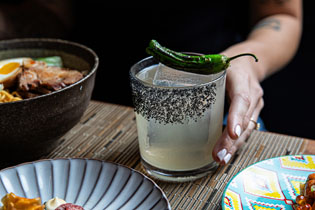
For non-drinkers or those pacing themselves, the Matcha Nolada is essential. Bright matcha, coconut, pineapple, and lime create a cocktail that tastes like a Tokyo vacation via Waikiki. The broader beverage program shares that inventive streak, with thoughtful cocktails, a curated sake selection, and an eclectic beer lineup that includes Aizome—a Saison brewed with Edmund’s Oast, scented with sansho pepper.
No meal feels complete without dessert, specifically, Hamaya’s playful Golden Arches Hand Pie. Roasted South Carolina apples, butterscotch, and a buttery crust meet a glossy miso caramel, but the nostalgia comes from the packaging: a small, bright carton modeled after the McDonald’s apple pie box. Hamaya’s first apple hand pie came from a McDonald’s in Japan, and Shokudô’s version is a polished homage wrapped in wabi-sabi whimsy.
Dining at Shokudô is best approached with curiosity and company. Start with skewers—the shishitos, the beef “toro,” the duck tsukune, then move into dumplings, toasts, noodles, and finally the curry or mazesoba. Spread dishes across the table, share everything, and treat the menu like chapters in a story. That’s how Hamaya imagines it anyway, it’s the spirit of an izakaya translated for Charleston: shared plates, lingering conversations and a sense of convivial rhythm.