travel: Crown of the Continent
03 Jul 2026
A first-timer’s guide to Glacier National Park
July-Aug 2026
Written By: Katie McElveen
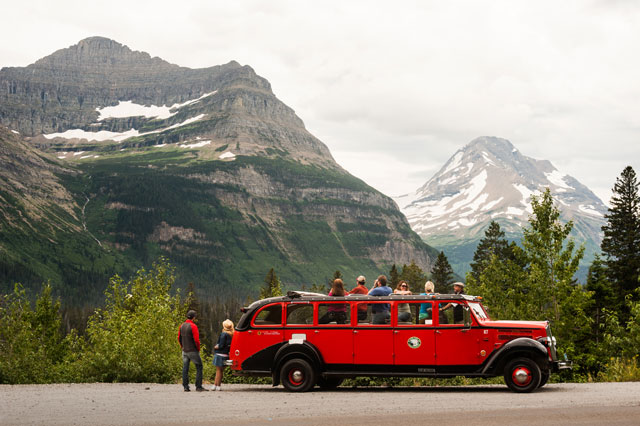
More than three million people visited Glacier Park in 2025. Here’s how to make the most of a trip to the “Crown of the Continent.”
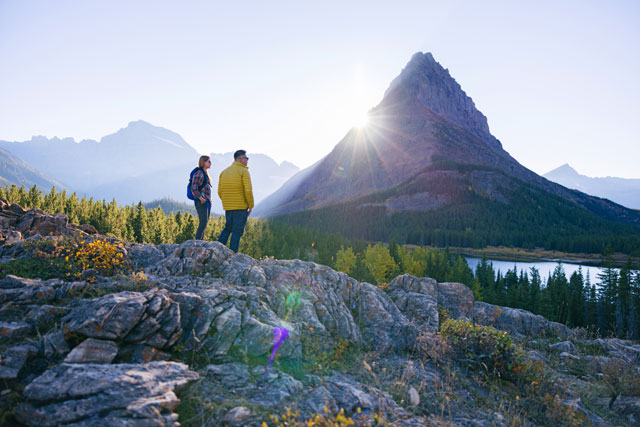
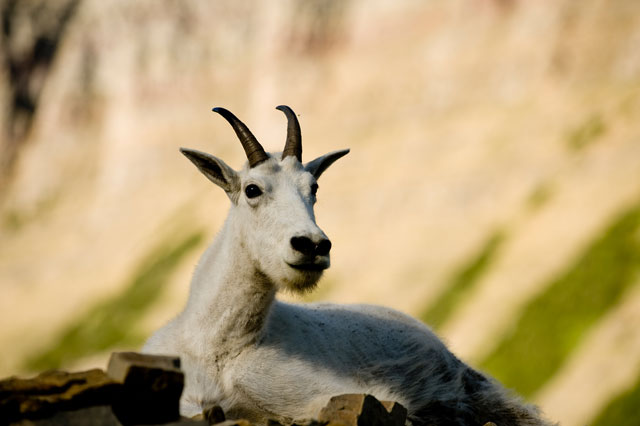
The first time I visited Montana’s Glacier National Park I cried. Overwhelmed and humbled by the sheer size and beauty of the jagged peaks and the deep valleys that surrounded me, I burst into tears and vowed to return. As the day continued, Glacier unspooled with surprise after surprise, which included moose grazing in a swamp, hand-feeding a chipmunk, and watching mountain goats balance atop slivers of stone. It took me two more visits to finally see a grizzly bear, but when I did, the mother and cub ambling along the side of an empty roadway were worth the wait. That same year, it snowed in July.
I hadn’t realized how lucky I was. Not only was I in Montana with locals who had grown up with Glacier as their backyard, but in 1985, Glacier Park still felt undiscovered. We often hiked for hours without passing another soul, ate lunch alone on a giant boulder overlooking the unearthly blue water of St. Mary Lake, and rarely ran into traffic jams.
Today, it’s impossible to see Glacier National Park the way I did, but that doesn’t mean you shouldn’t go. Over the years, I’ve been back several times, and I always leave fulfilled and awed. Here’s how to make the most of your adventure.
Note changes to previous years
The good news: visitors to Glacier Park no longer need to make a reservation for their vehicle. The challenging news: the park has instituted a
time-ticketed shuttle system AND a three-hour parking limit at Logan Pass, midpoint on
Going-to-the-Sun Road, and starting point for many popular trails. (There are bathrooms here, too.) Visit nps.gov/glac/index.htm for full information and for links to purchase shuttle tickets.
Carry lots of food and water
Once inside Glacier Park, there is nowhere to purchase food, drinks, or other necessities. If you plan to hike, bring food, twice the water you think you’ll need, and a sealable trash bag. Take all trash with you, including organics like apple cores and banana peels.
Other essentials
Hiking in Glacier is hiking in the wilderness; be prepared with bandages, alcohol wipes, a light raincoat, a hat, sunscreen, a flashlight, a water-purification system like a LifeStraw®, and heavy-duty bear spray with a range of at least 30 feet. (Be sure to hang it on the outside of your pack.) Binoculars are a good use of space as well—you never know when you might want a closer look at an animal grazing across a lake or valley. Throw in a pair of water shoes, too, so you can make your way across rocky beaches for a dip in one of Glacier’s lakes.
Arrive early
There’s no way to adequately describe the scenery along Glacier’s iconic, 50-mile-long Going-to-the-Sun Road; just do it. Avoid traffic jams at popular viewpoints and sharp turns (driving is challenging on the twisty roadway) by arriving at sunrise, which, during the summer in Montana, occurs around 5:45 am. Surprisingly, Glacier is open 24-hours a day, making it easy to cruise through the gates before traffic backs up. You’ll also want to arrive early if you’ve booked a tour inside the park, since parking lots fill quickly.
Respect wildlife
Charging bears aren’t the only wildlife danger in Glacier. Moose and mountain lions can also be aggressive. If you do run into an animal, make noise and back away slowly. Stay on the trail, too: shortcuts crush plants and ruin the infrastructure of the trails, which causes them to deteriorate.
Take fabulous photos
Mountain goats and other wildlife are often far away from where you’re standing. To improve your photos, consider adding a zoom lens to your phone.
Download your maps ahead of time
Glacier’s internet access is spotty at best, so to be sure you can get where you’re going, download hiking and driving maps to your phone, then check them, with your phone on airplane mode, to ensure you can access them when you’re out of range.
Check out the sky
Glacier National Park is a certified International Dark Sky Park, meaning that, after the sun sets, chances are good that you’ll spot the Northern Lights, the Milky Way, and other celestial sights. It’s easy to DIY, but you can also participate in ranger-led programs that are listed on the park’s website.
Don’t miss the east side of the park
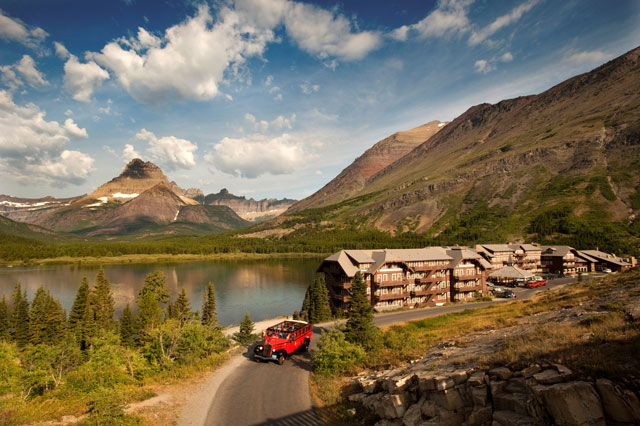
There’s plenty of Glacier Park to explore beyond St. Mary Lake, which is the east-side terminus of Going-to-the-Sun Road. Consider driving north out of the park and re-entering at the Many Glacier entrance, which will take you to the historic Many Glacier hotel as well as trailheads for Red Rock Falls (easy) and Grinnell Glacier (very strenuous).
Explore the history of the land
Owned and operated by a member of the Blackfeet Tribal Community, Sun Tours (suntours.co) offers daily interpretive Indigenous tours of the park.