Dancing with Dolphins
02 May 2026
On a cruise in the Peruvian Amazon, wildlife abounds
May-June 2026
Written By: Katie McElveen | Images: Delfin Amazon Cruises
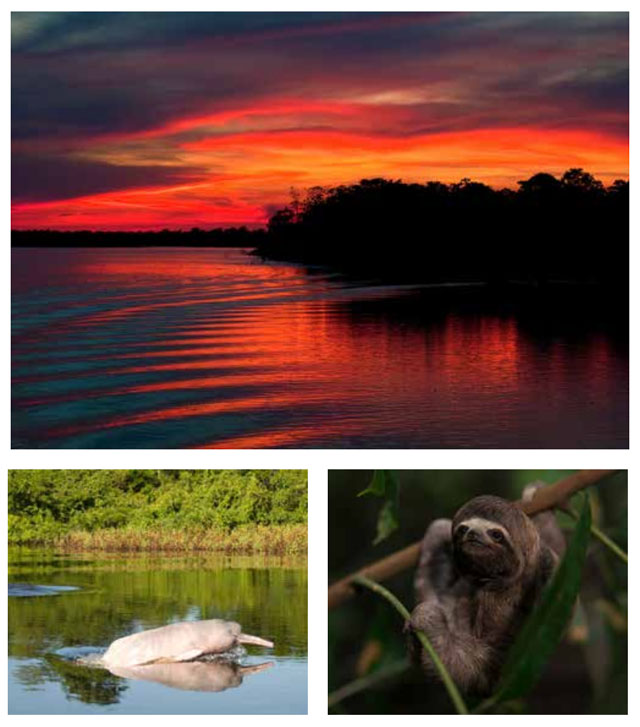
I’m watching the kaleidoscope of birds and butterflies circling our skiff as it moves up the Amazon River, when, suddenly, the jungle recedes, and the river widens into a lake. After a few minutes of cruising, our naturalist guide, Ericson Pinedo, signals the driver to stop the boat and drop anchor. Apparently, he’s spotted some of the rare pink dolphins that inhabit this remote body of water and doesn’t want to spook them.
That’s because our goal is not just to catch a glimpse of the massive rosy mammals—we’re going to get into the water with them. “They’re shy but curious, so swim slowly and let them come to you,” says Ericson as we slip into the tea-colored water. “They also have no idea how big they are.”
Seconds later, I see a flash of pink skin as one of the dolphins comes up for air; quick as a wink, he, or she, swims past me so quickly that I can’t believe it’s the same dolphin. Soon, a small group—pink dolphins don’t live in pods—has circled our boat, getting closer with every pass.
Occasionally, I feel the swish of water from a tail against my legs, but mostly, though, the colorful dolphins seem to go about their business. Though they’re clearly dolphins, they look a bit different from what I had expected, with longer, narrower snouts and shorter dorsal fins.
And then they’re gone, vaporized into the water like cotton-candy-colored mirages.
Exploring the Amazon
The dolphin safari occurred on the third and final full day of an Amazon River cruise with Delfin Amazon Cruises, a three-vessel, river cruise line that focuses solely on the Peruvian Amazon basin. The small ships are an advantage, allowing us access to tributaries too narrow for larger boats. Each day, we board open skiffs with naturalist guides, who take us deep into the misty landscape.
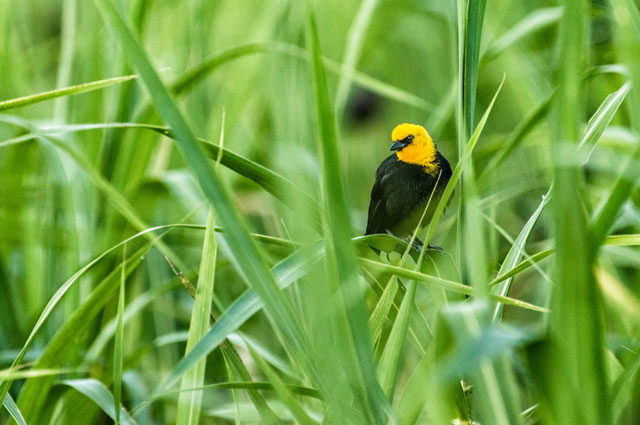
It’s impossible to comprehend the level of remoteness here. Some of the towns we pass are large, with thousands of residents, but surrounded by the delta’s impenetrable tangle, they’re only accessible by water. Wild as it is, the jungle is thick with a remarkable array of animals, plants, birds, and insects. And while we never spot one of the jaguars that roam the jungle, over the course of our time in the Amazon, we watch dozens of monkeys play in the treetops, glimpse caiman—basically freshwater crocodiles—sunning themselves on logs, and see hundreds of birds give shape to air currents as they swoop over the river en masse.
It’s hard not to laugh as we fish for piranha with chicken necks and string—I’m not sure what we’ll do if we actually catch one.
One day, we visit a small settlement where we’re blessed by a shaman; another, we watch a sloth swim determinedly across the river, grab a tree root, and haul herself out of the water and up the tree, where she delights us with her serene, almost painted, smile.
The Experience
Delfin Amazon Cruises was founded in 2006 by a Peruvian couple; within just a few years, it became the first cruise line ever invited to join the prestigious Relais & Chateaux hospitality organization. It’s easy to see why: from the moment our flight from Lima touched down in Iquitos, where we were met by a Delfin representative, every detail was covered.
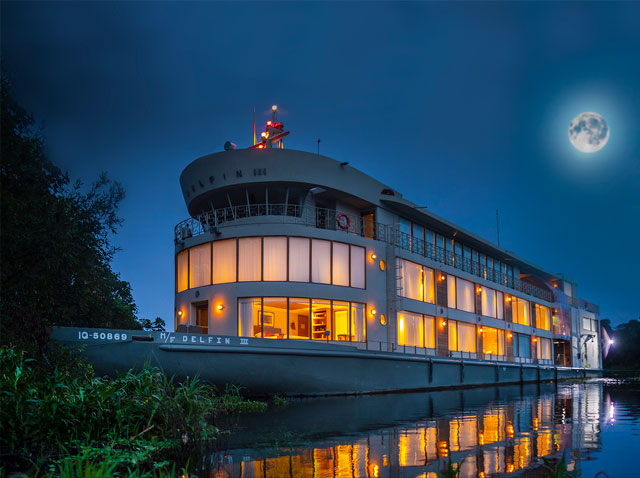
The ships themselves resemble small boutique hotels. Ours, the 22-suite Delfin III, was done in warm wood with wrought-iron accents and lots of local art. Suites have large bathrooms and floor-to-ceiling windows that look out over the scene. There’s a small gym, a massage room, a sun deck, and a whirlpool. Meals were local and refined—multiple courses, wine, white tablecloths—and filled with delicious local foods that were every bit as exotic as the scene outside.
TRAVEL TIPS
When to Go
High-water season (January-June) means most activities on the water (canoeing vs hiking)
Low-water season (July-December) is when you prefer to see land animals like jaguars.
Keep in Mind
Bring what you need: there are also no port stops on a cruise through the Peruvian Amazon.
Handicrafts are available to purchase at one of the settlements; note that certain seeds, artifacts, and other items cannot be brought into the US.
Delfin provides rain boots, ponchos, umbrellas, and bug spray.
Logistics
From Lima, you’ll fly to Iquitos, where you’ll board a well-provisioned van for the two-hour ride to Nauta and a skiff to deliver you to the ship.
Be Prepared
Flight schedules to and from Lima mean long waits in the airport.
Lima is a convenient jumping-off point for visiting other South American destinations such as Cusco, gateway to Machu Picchu.