art seen: An Artist’s Eye on the Marsh
02 Jul 2026
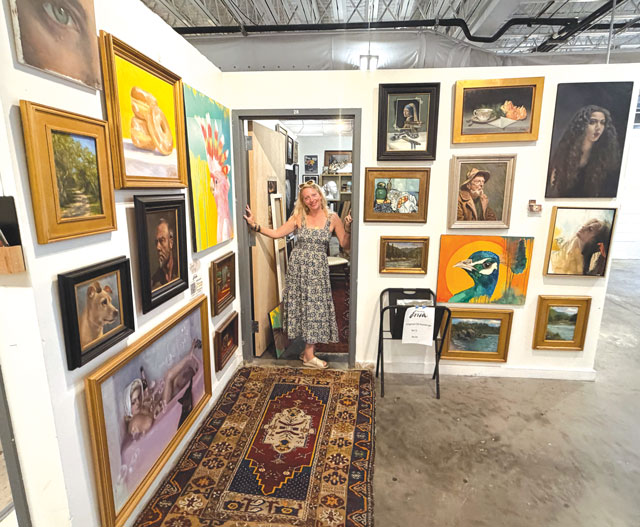
For fine artist Rana Jordahl, painting wildlife is about presence
July-Aug 2026
Written By: Emily O’Brien | Images: Rana Jordahl
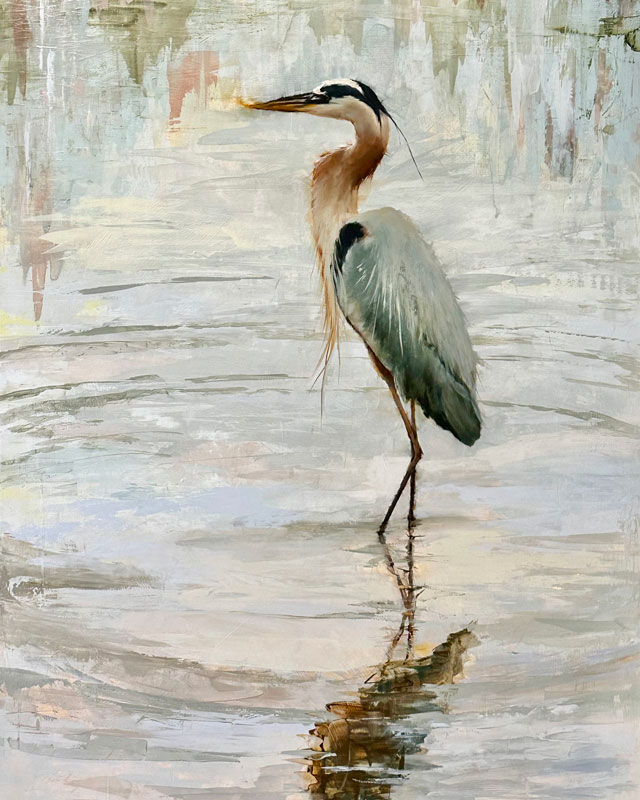
On a quiet morning in the Lowcountry, before the heat settles in and the birds retreat into shade, Rana Jordahl is already outside with her camera, documenting those kinds of fleeting moments that are easy to miss if you’re not looking for them. “A handful of those photos kind of float to the surface,” Rana Jordahl says. “And then an idea starts to percolate.”
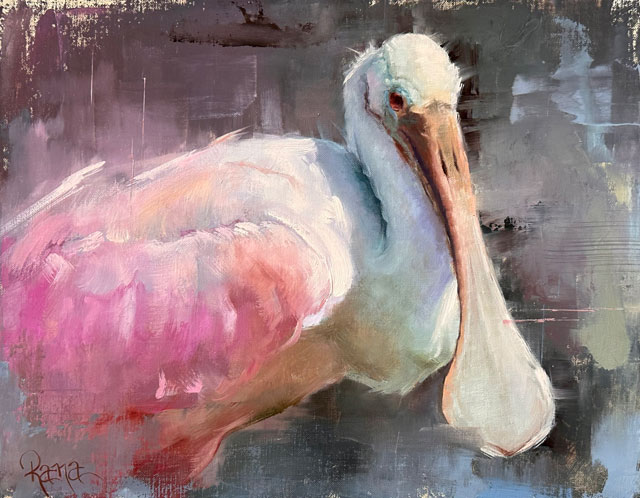
Jordahl has built her practice around observation first, allowing what she sees in the field to settle and reshape itself before it ever reaches the canvas. Her subjects—herons, egrets, roseate spoonbills—are familiar to anyone who has spent time along the marsh, but her paintings are less about documentation and more about experience. “I just love observing their behavior, how they fly and interact with one another,” Jordahl says.
A practice shaped over time
Art has been a constant for her since childhood, though the path to becoming a full-time painter took time to come into focus. She studied advertising and graphic design in college and worked in that field before stepping away to raise her children. It was during that period that something shifted. “That was the point where I decided that I wanted to pivot into the fine art realm,” she says. “I haven’t turned back since.”
Early on, her work included a broader range of subjects, including the expansive Lowcountry landscapes that define the region. Over time, however, her lens narrowed. “The marshes become more of a beautiful backdrop for the wildlife that I tended to focus on,” Jordahl says. “I would find myself drawn to more of the wildlife aspects than the actual landscape itself.” The environment now serves to support the animals’ presence rather than compete with them.
Back in the studio, Jordahl begins by reviewing the photographs she’s taken and develops sketches of her favorites, working through different arrangements before committing to a final direction. “I tend to paint in layers,” Jordahl says. “It’s not just a one-setting type of thing.” Paintings often develop over days or weeks, sometimes longer, with multiple works in progress at once as she moves between them.
That approach leaves room for adjustment, but it also raises a familiar question: when working in a loose, impressionistic style, when is a painting finished? For Jordahl, the answer isn’t technical so much as intuitive. “It becomes more is more, and not better,” she says. “I really feel like it’s just a sense of knowing that if I continue to apply more paint, it’s not really necessarily going to make it better.”
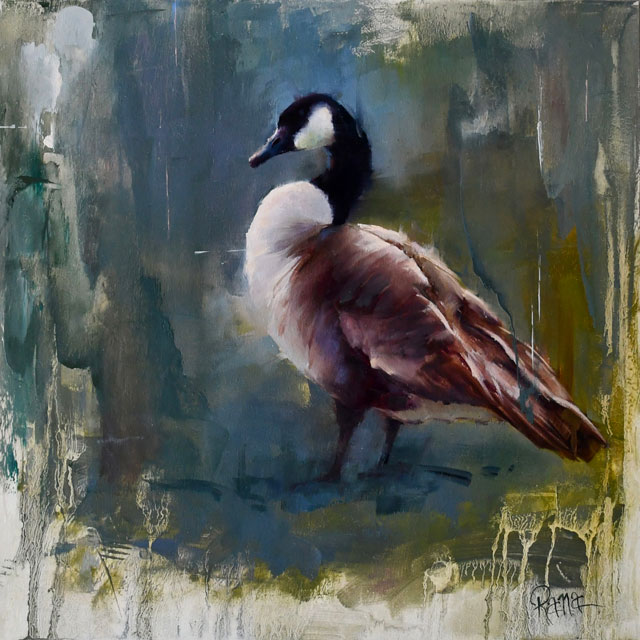
“Usually at first glance, a viewer kind of sees what it is,” Jordahl says. “Then they stand there a little bit longer and really take it in.” What she hopes remains is less about accuracy and more about feeling. “Ultimately, I want the viewer to feel something, to be moved by it in some way,” she says.
A deeper relationship with place
Her connection to the Lowcountry landscape has deepened alongside her work. Years spent observing the same environments have led to a broader understanding of how those ecosystems function and support the wildlife she paints. “I’ve gained a ton of knowledge and appreciation for the landscape, and how living environments help wildlife thrive,” Jordahl says. Seasonal shifts play a role in that rhythm, particularly in spring, when activity peaks. “Spring is a very busy time for me to observe outside,” she says. That time of the year allows for deeper insight into the breeding and nesting season.
Her process continues to evolve, and experimentation remains central to her studio practice, whether through new tools or different approaches to applying paint. “Sometimes experimentation is the initial idea in and of itself,” Jordahl says. “I don’t think you can get there without experimenting in that way.” The goal isn’t to settle into a fixed method, but to keep discovering what’s possible.
What comes through in Jordahl’s work is a balance between observation and interpretation. The birds are recognizable, the settings familiar, but there’s still room for the viewers to meet the painting on their own terms. She isn’t trying to replicate every detail so much as suggest it—enough to hold your attention and then let it unfold a little more over time.
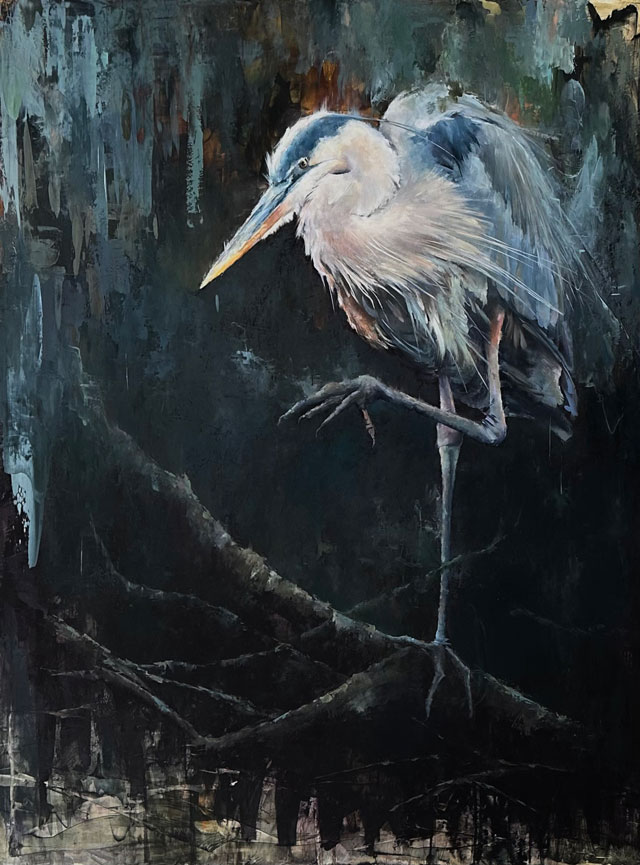
Just announced: “Where the Water Remembers” (pictured above) was selected for the prestigious American Impressionist Society National Exhibition, featuring 180 works by some of the nation’s finest Impressionist artists at Mockingbird Gallery in Bend, Oregon, from September 4–October 3, 2026.
View more of her work at ranajordahl.com