NEWSMAKER: PROTECTING THE LOWCOUNTRY’S ORIGINAL LOCALS
01 Jul 2026
Counting dolphins with Lauren Rust
July-August 2026
Written By: LIZ REGALIA | Images: KEEN EYE MARKETING
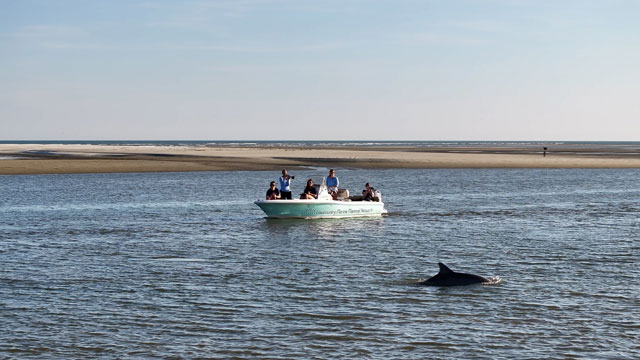
For most of us, spotting a dolphin fin in the water feels like luck. For marine biologist Lauren Rust, it’s a science that she wants Charlestonians to know more about. Every week, Rust spends six hours slowly cruising the Kiawah River looking for fins. With help from team members at the Lowcountry Marine Mammal Network (LMMN), her goal is to check in on every wild dolphin that calls this iconic waterway home.
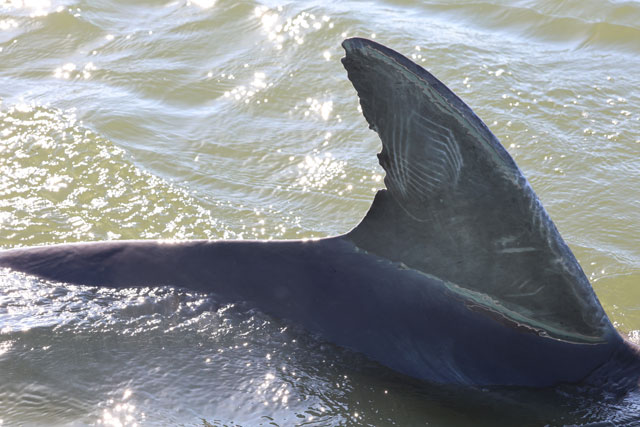
“Once we spot one, we safely approach to get a close-up photo of its dorsal fin,” Rust says. “This is how we identify individuals. Over their lifetime, they incur nicks and notches on their fins from playing, rolling, biting, or injuries that make their dorsal fins unique like a fingerprint.” With each sighting, Rust also collects environmental data, such as the weather and tide conditions, and looks for any changes in size or skin lesions, which can be caused by poor water quality. “All of this information then goes into our database once we’re back on land,” Rust says. Keeping individual data records on the marine mammals that live in Charleston allows LMMN to monitor each dolphin’s habits and health over time. This helps scientists understand how dolphins use their environment—where they eat, socialize, rest, and care for their young. But it is not just biologists who benefit from Rust’s research.
“Monitoring dolphin health ultimately helps us better understand ocean health, which is important to all of us living in the Lowcountry,” Rust says. “For example, would you want to swim in the same water that makes dolphins sick?” Raising awareness around how marine mammal research impacts Charlestonians is exactly why Rust founded LMMN in 2017. After earning her degree in marine biology from the College of Charleston, she went on to lead research projects with marine organizations across the country. But the Lowcountry’s original locals, our resident dolphins, called Rust back home.
“My mission was to bridge the gap between local scientists, dolphin research, and the general public,” Rust says. “I’vespent many years working in a scientific capacity where the science is good, and the data is published, but the public either doesn’t see it or understand it. I wanted to highlight that information in a way that’s fun, accessible, and easy to understand.”
Today, Rust splits her time between crucial dolphin rescue and research efforts and education initiatives. As the executive director of LMMN, she is a permit holder for the South Carolina Marine Mammal Stranding Network (SCMMSN), an organization that retrieves stranded dolphins on beaches and waterways in hopes of learning more about their life history. This allows Rust and her team to respond to sick, injured, and dead marine mammals along the South Carolina coast. Approximately 50 marine mammals strand every year in South Carolina, a staggering 80 percent of which are bottlenose dolphins.
Here in Charleston Harbor, cargo ship traffic is becoming an increasing concern that could impact these numbers. “A recent study showed dolphins arecommunicating louder in the harbor due to increased underwater noise,” Rust says. “They rely on sound to communicate, travel, and find food.The louder it is, the harder it can be.” Based on the latest identification research, which Rust helps lead, there are only an estimated 400 dolphins living in Charleston today. The low number is often shocking and saddening to hear for many residents who have grown so accustomed to marveling in their presence. The reality, however, is that our local dolphin population is largely in the public’shands to protect.
“We’re seeing more human impacts with dolphins, whether it’s harassment, like feeding, chasing, and touching, or boat strikes and entanglements,” Rust says. “Charleston is becoming more populated, and so are the waterways, putting dolphins at risk.”
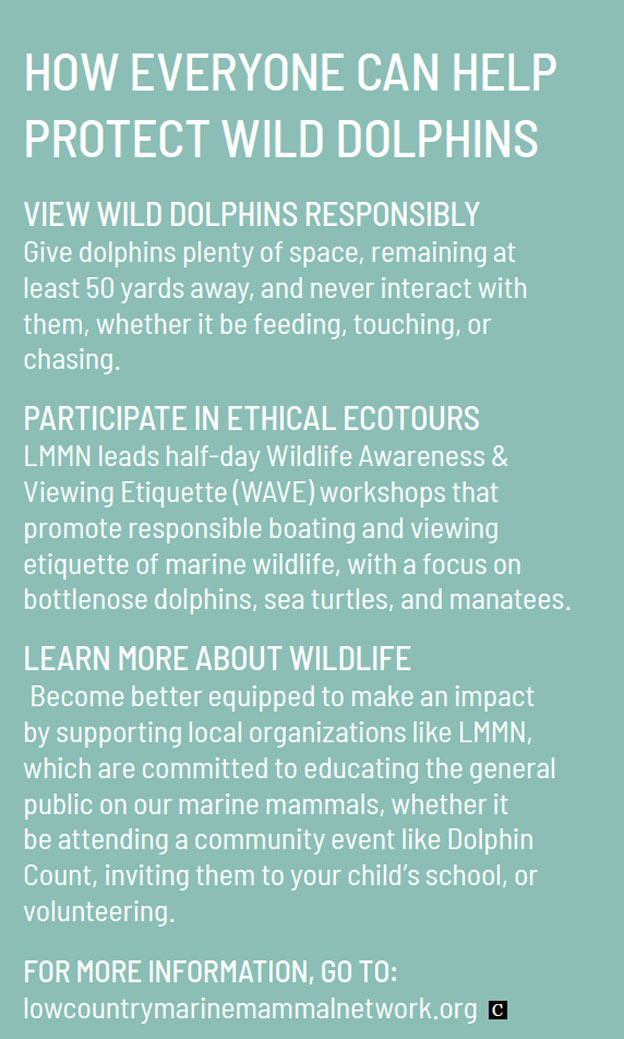
This is why outreach and educational initiatives are so important to Rust. Their most popular is the springtime community-driven Dolphin Count. This event enlists the help of locals to spot dolphins in Charleston Harbor to raise awareness of how many live in such close proximity to us, as well as the serious threat that boats pose to their safety.
“Dolphins come to the surface a lot to breathe, socialize, feed, and rest, putting them at risk of getting hit,” Rust says. “We see boaters drive right over dolphins, and while they are fast and agile, accidents will happen. Boaters should slow down and go around instead of assuming a dolphin will get out of their way.” Along with educating the public on how they can protect dolphins, LMMN aims to inspire the next generation to do the same. The team visits schools throughout the year, and Rust recently returned to her alma mater as a faculty mentor for students in the marine biology graduation program—a full circle moment to help ensure a brighter future for Charleston’s original locals.